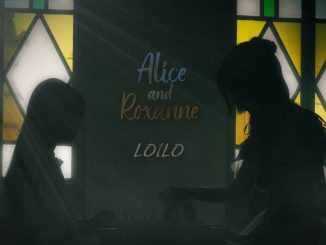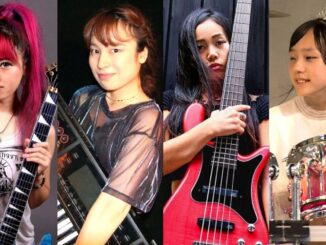
LOILO
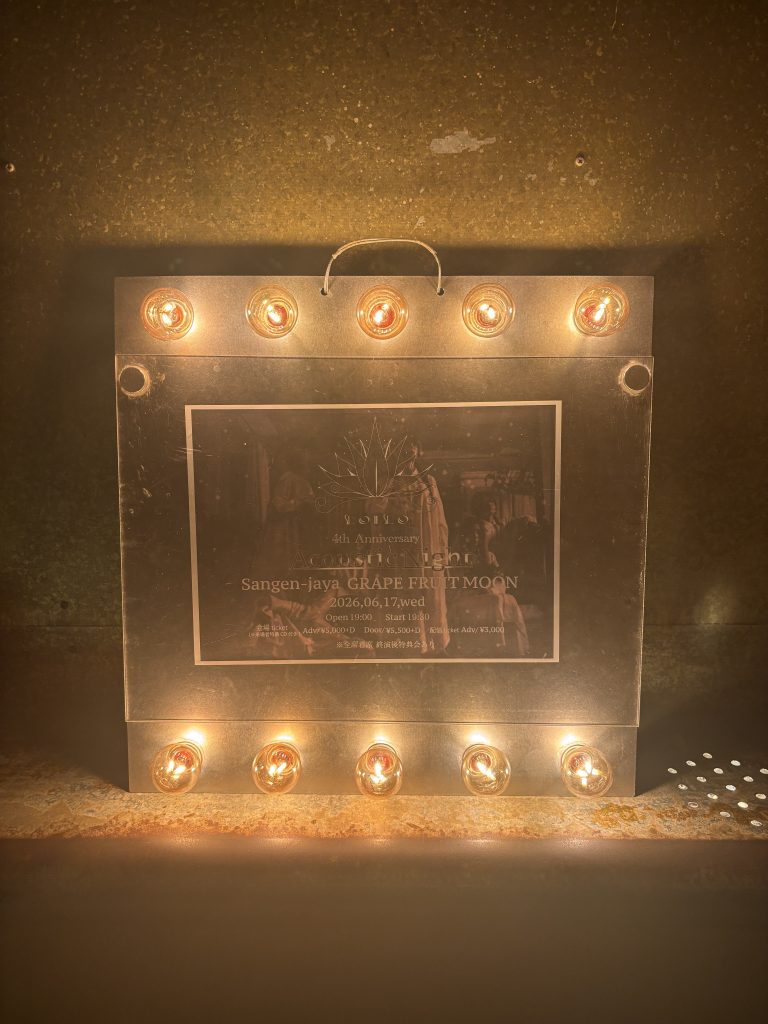
Sangen-jaya GRAPE FRUIT MOON – June 17, 2026
Live Report by Todd Nelson
LOILO’s one-man lives have become known for being far more than extended concerts. Rather than simply performing a longer setlist, the band consistently treats these performances as opportunities to create something unique. Their first one-man, “CALL ME RELIGION”, transformed their entire catalog into a single emotional narrative. The following year’s “THE ORDER OF ÆTHER” expanded even further, blending music with theater and storytelling to create something unlike anything I had previously experienced at a live performance.
To celebrate their fourth anniversary, LOILO once again chose a different path.
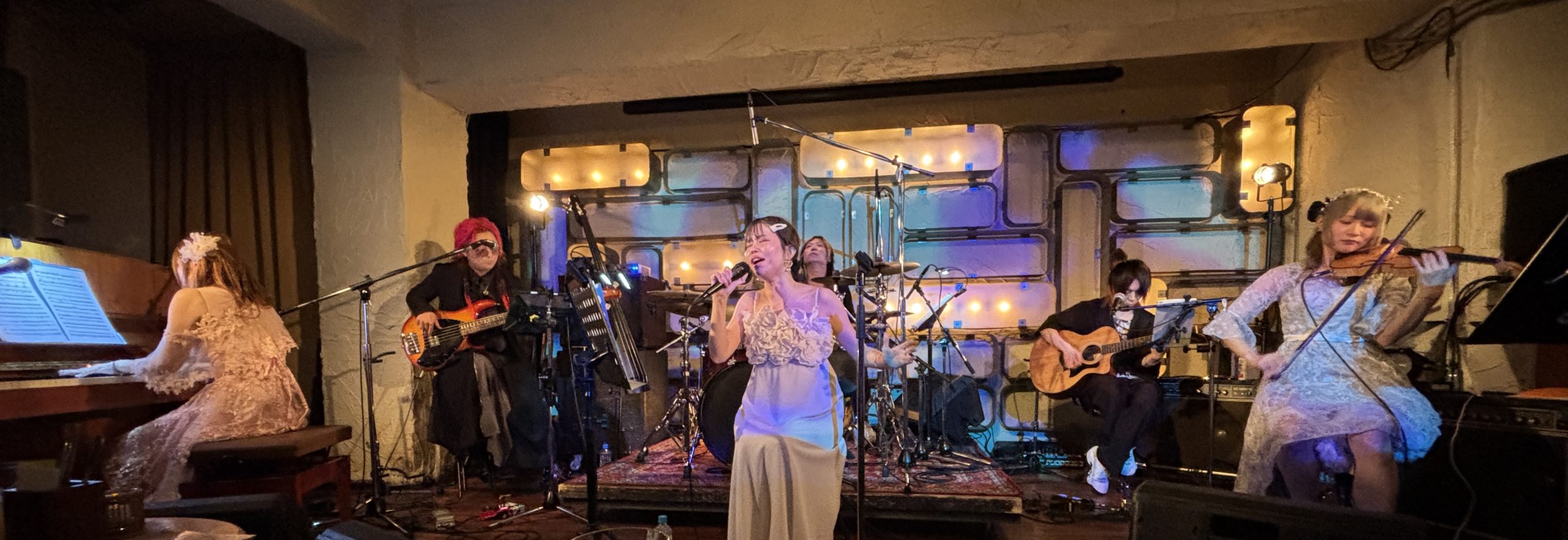
The band announced an entirely acoustic performance at Grapefruit Moon, an intimate setting with a relaxed jazz club atmosphere. On paper, “acoustic” may sound straightforward. Many people might imagine something similar to MTV Unplugged, where a band simply exchanges electric instruments for acoustic ones and performs familiar songs in a stripped-down format.
That is not what happened here.
While the lyrics remained the same and many melodies were familiar, nearly every arrangement had been carefully reconstructed. Tempos shifted, phrasing changed, instrumental roles evolved, and in some cases songs took on entirely different personalities. This was not an unplugged version of LOILO—it was LOILO reimagining their own music.
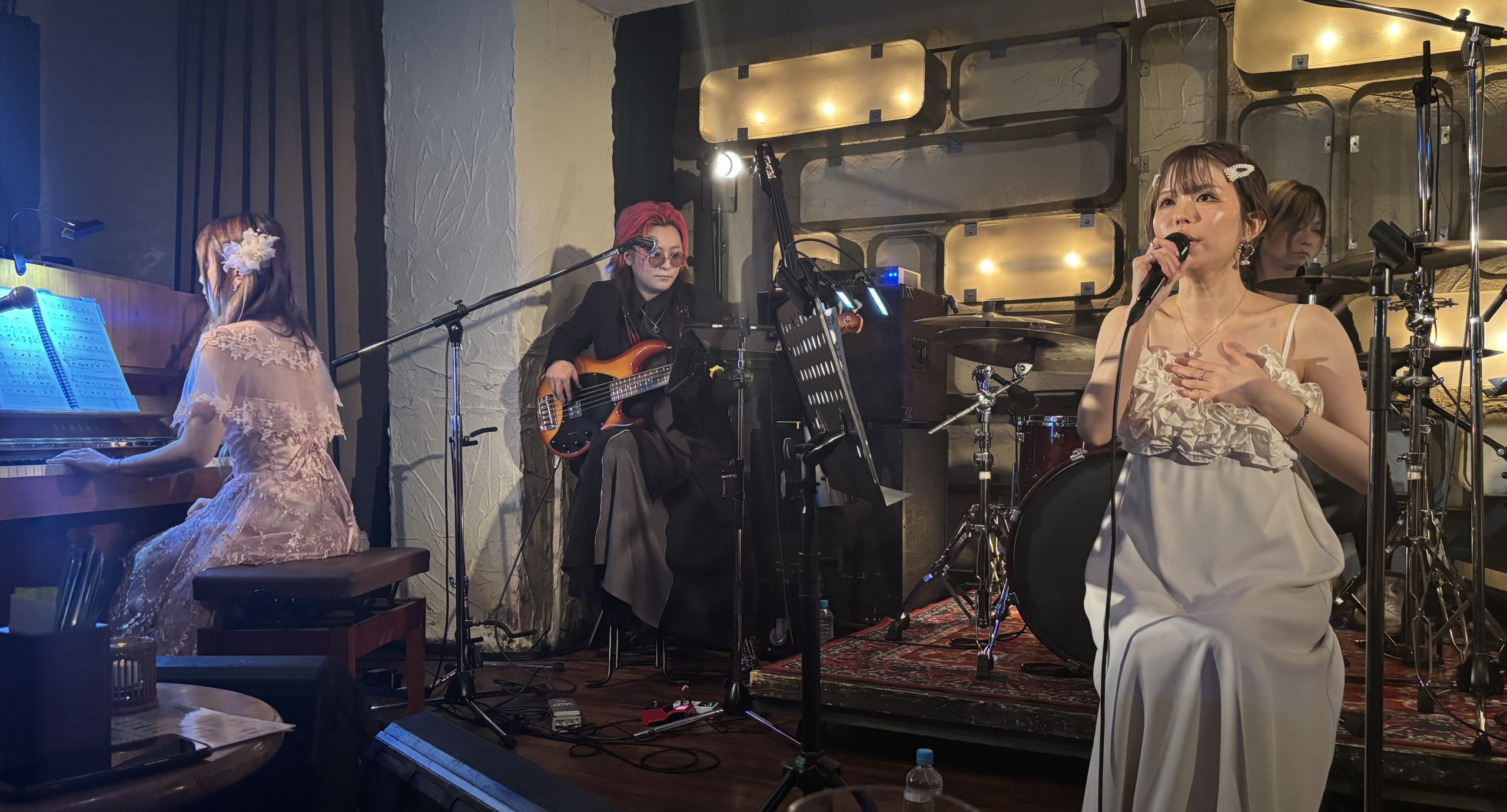
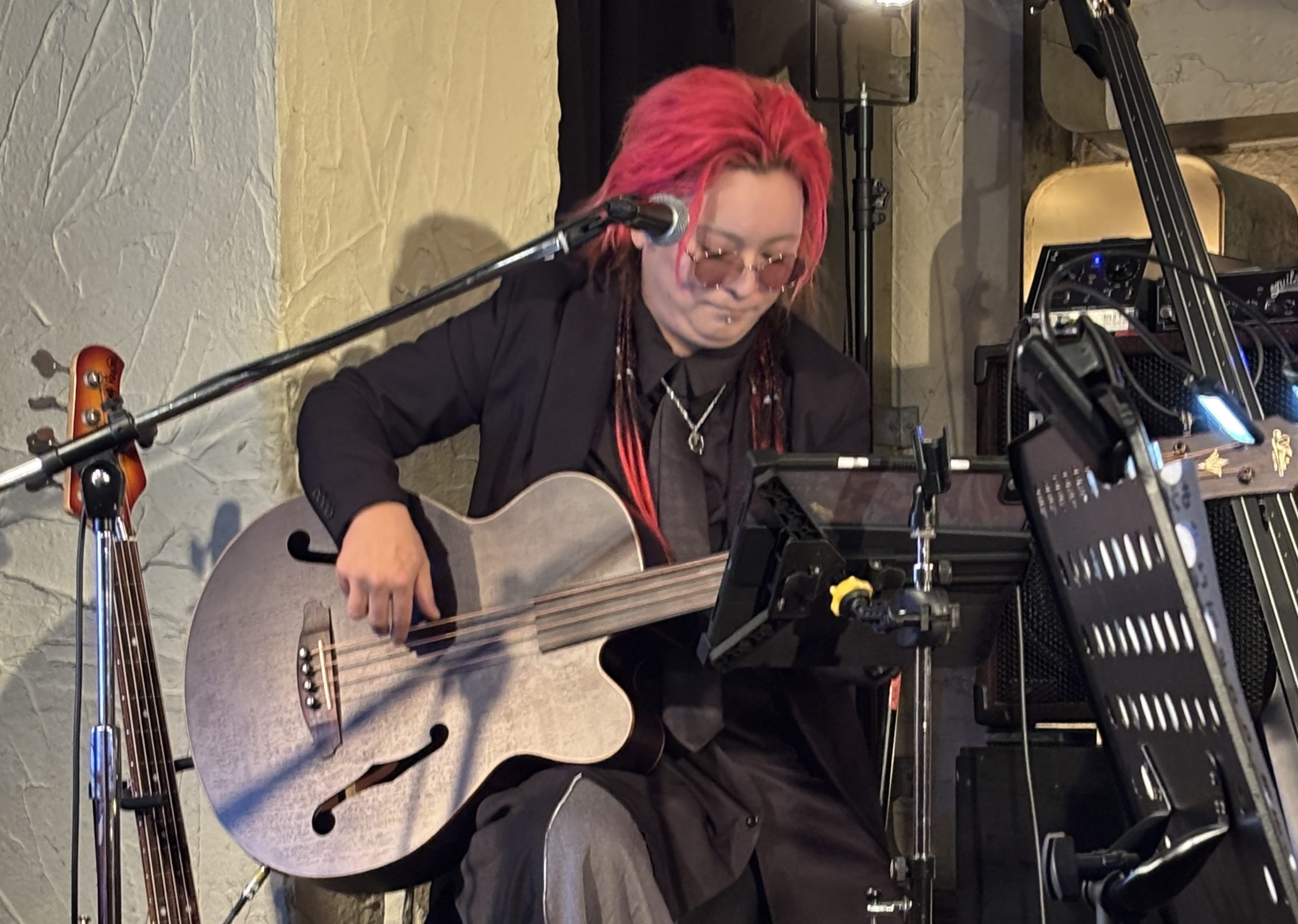
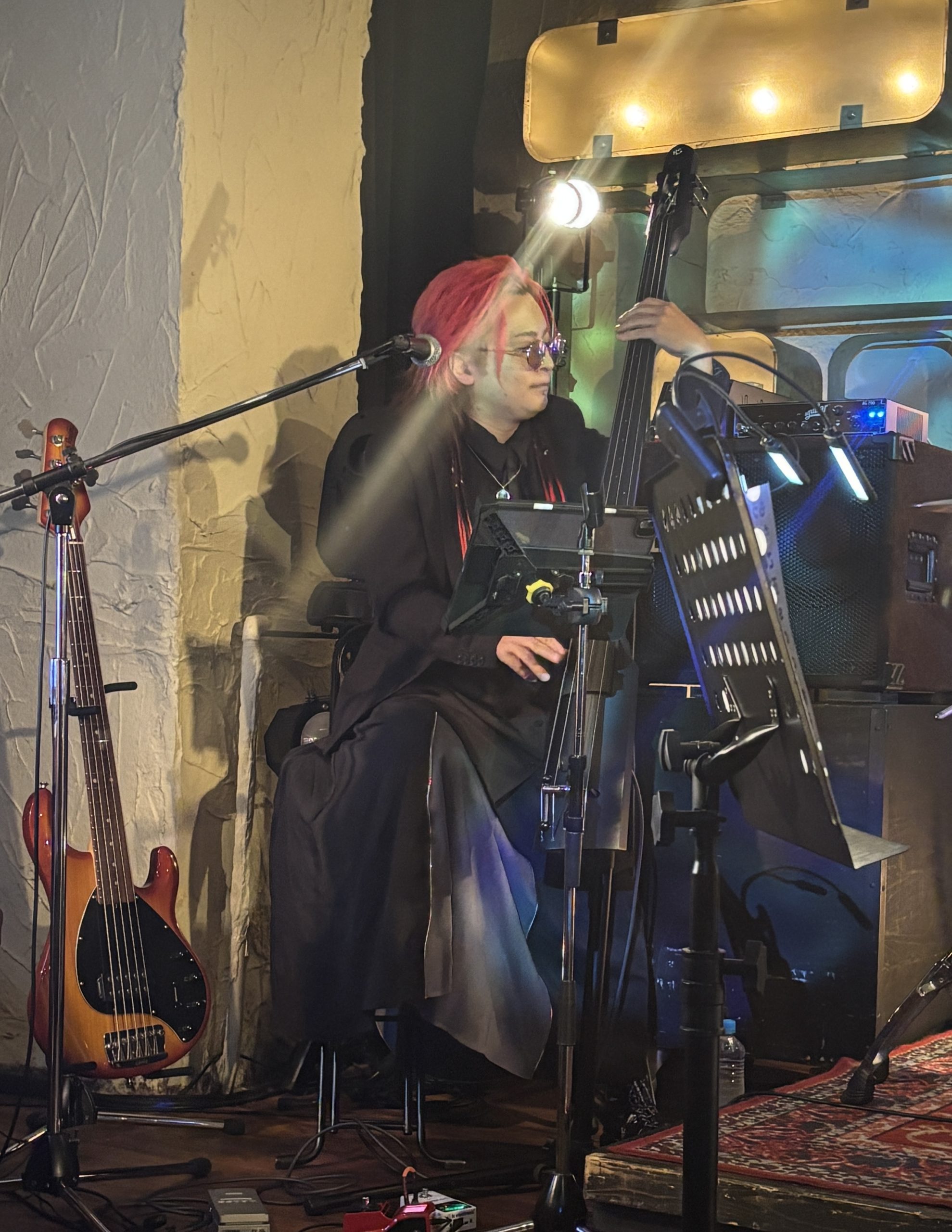
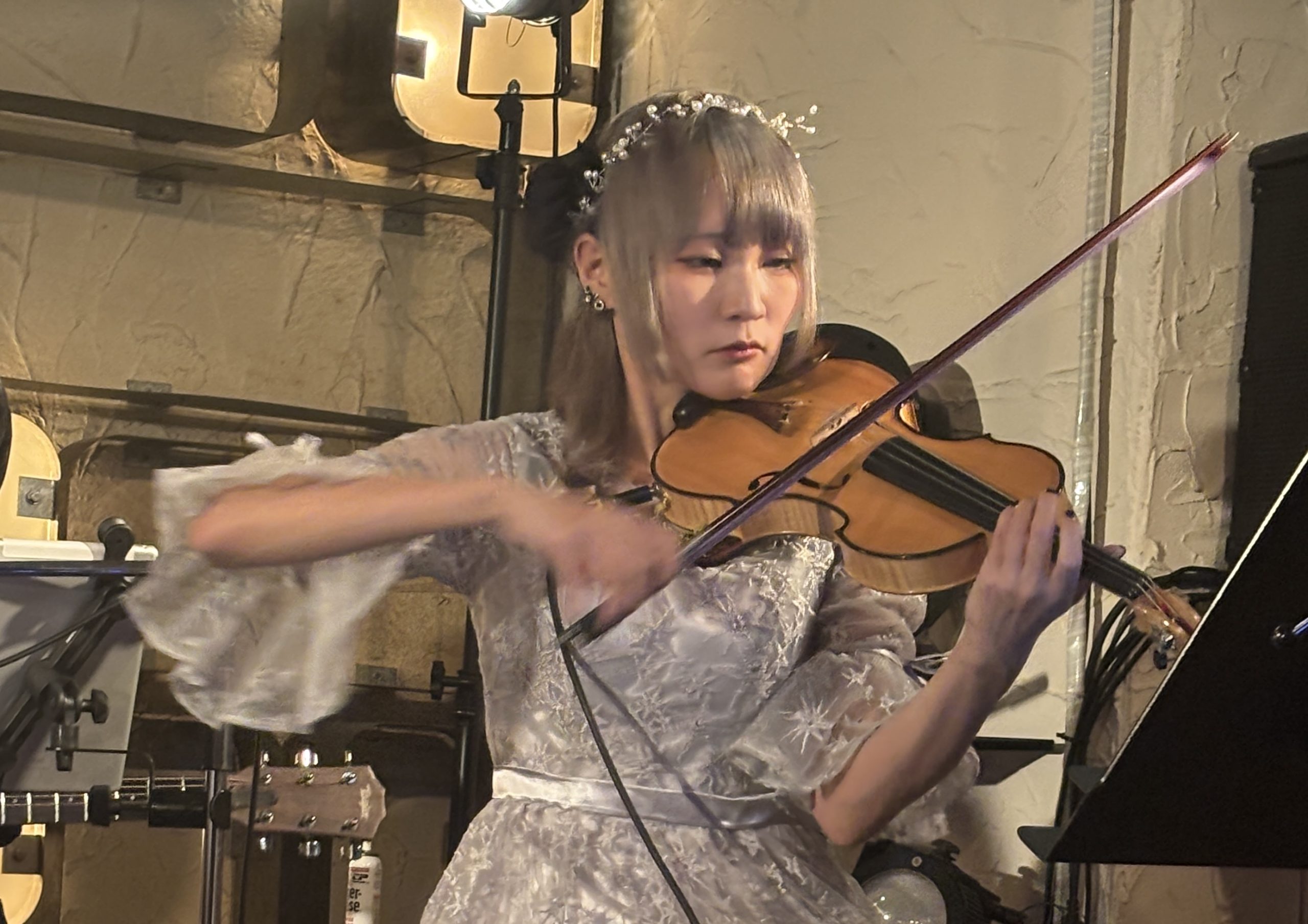
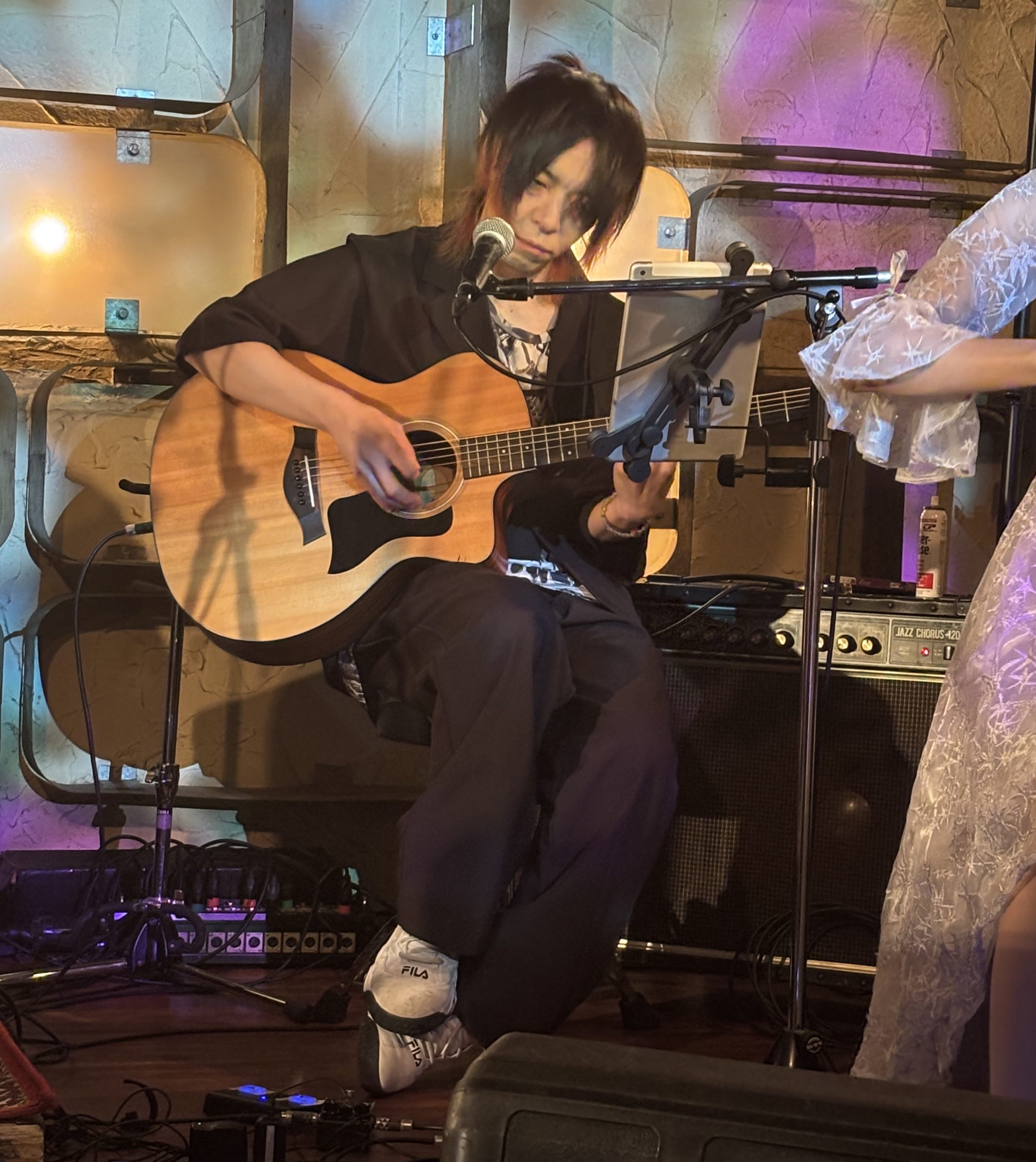
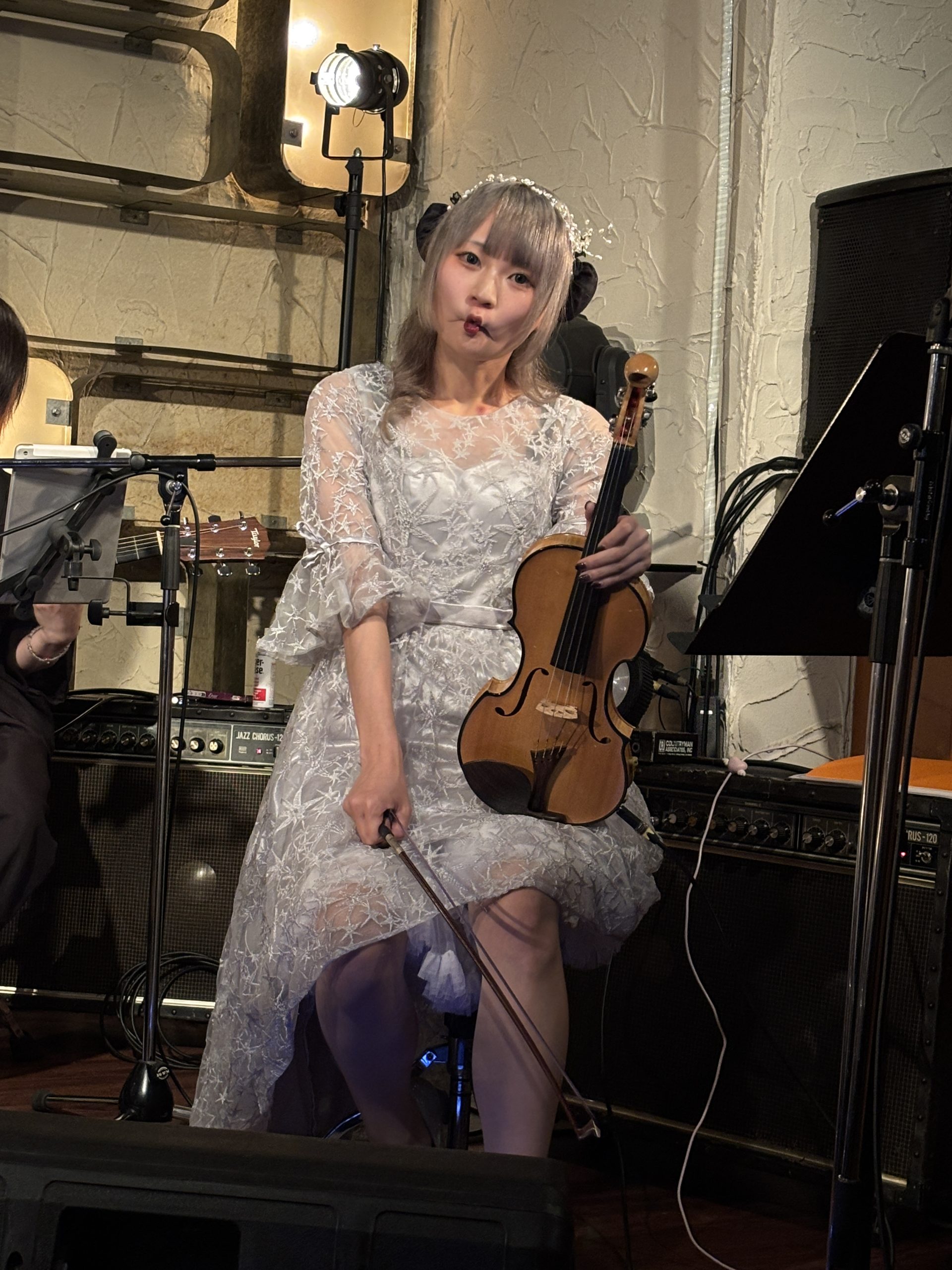
The acoustic concept also allowed each member’s musicianship to shine in different ways. Nana performed on a traditional piano throughout the evening while Ryosuke alternated between several basses, including an upright bass that added warmth and depth to many of the arrangements. Kohei traded his electric guitar for an acoustic, Rin frequently introduced delicate pizzicato passages alongside her violin work, and Mamoru dramatically altered his approach behind the drums, emphasizing cymbal textures, lighter dynamics, and intricate percussion that completely changed the rhythmic character of many songs.
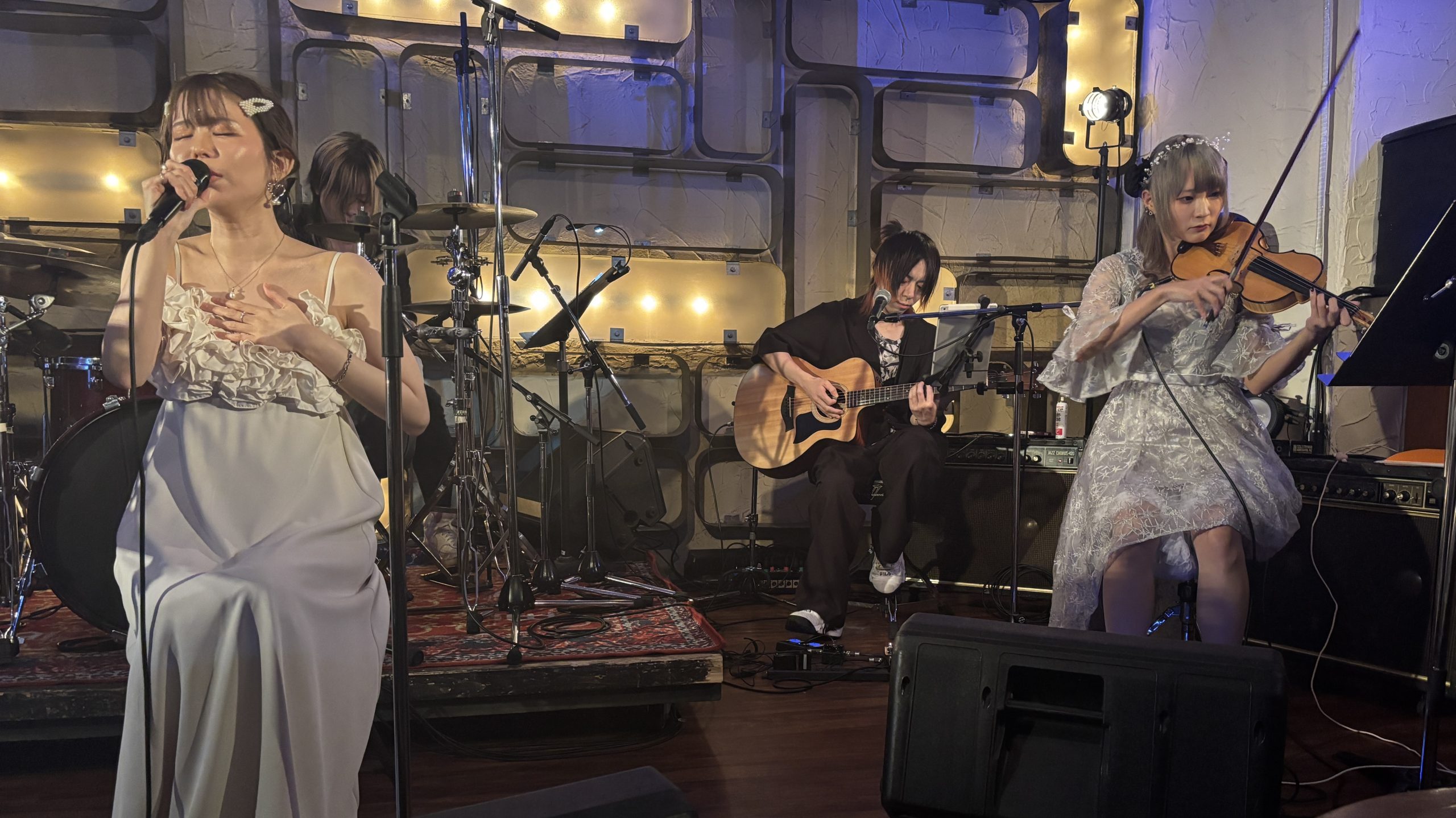
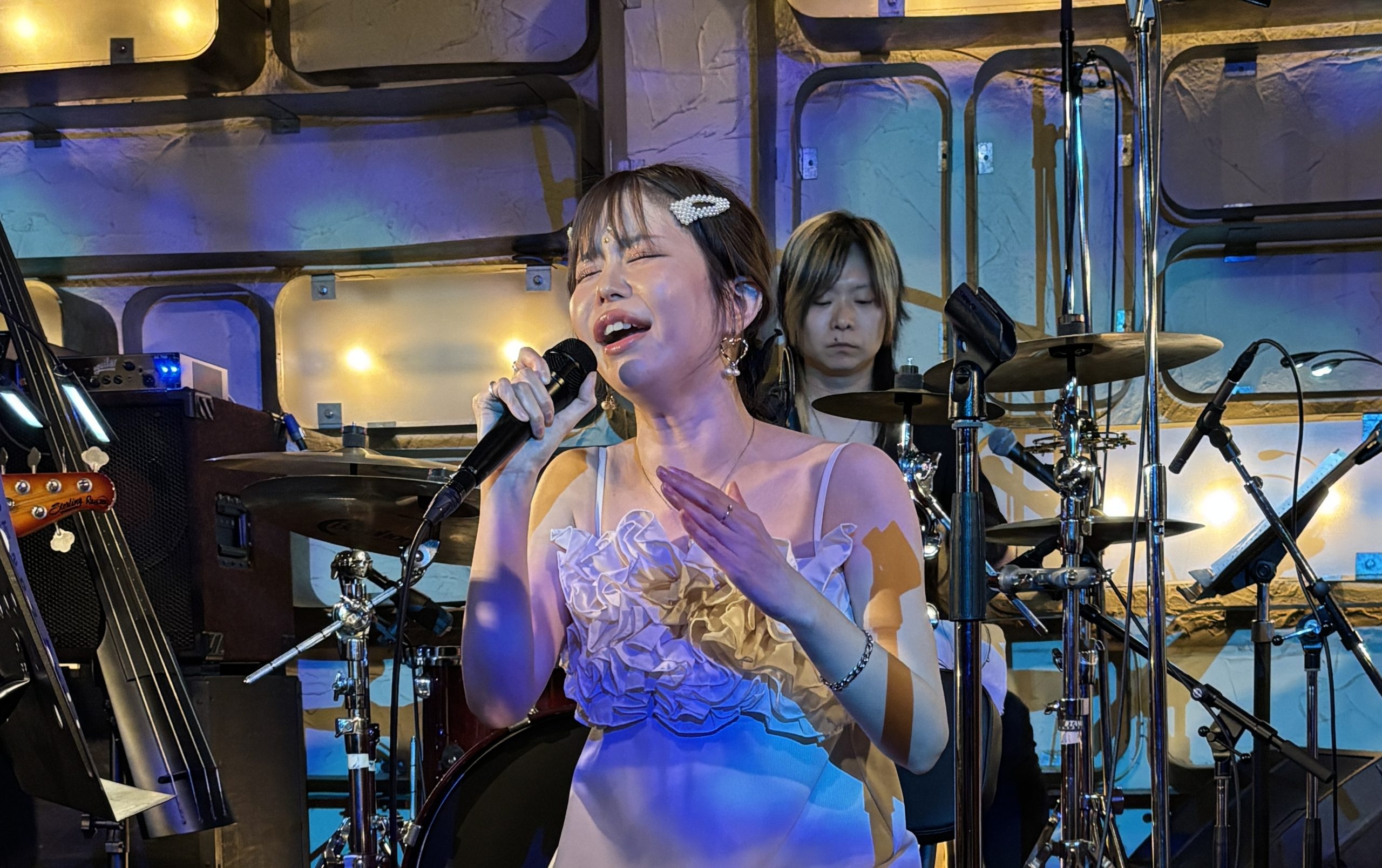
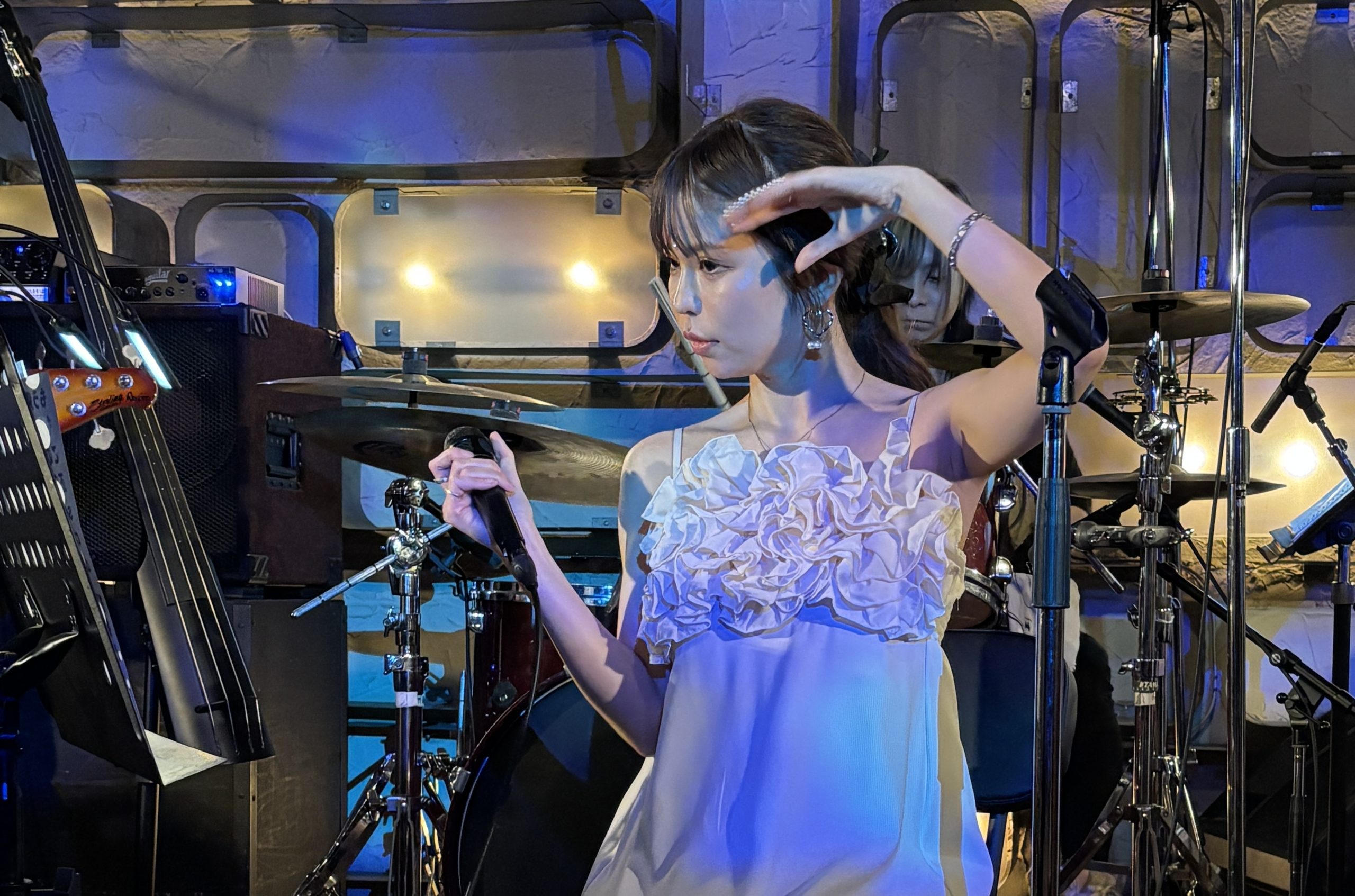
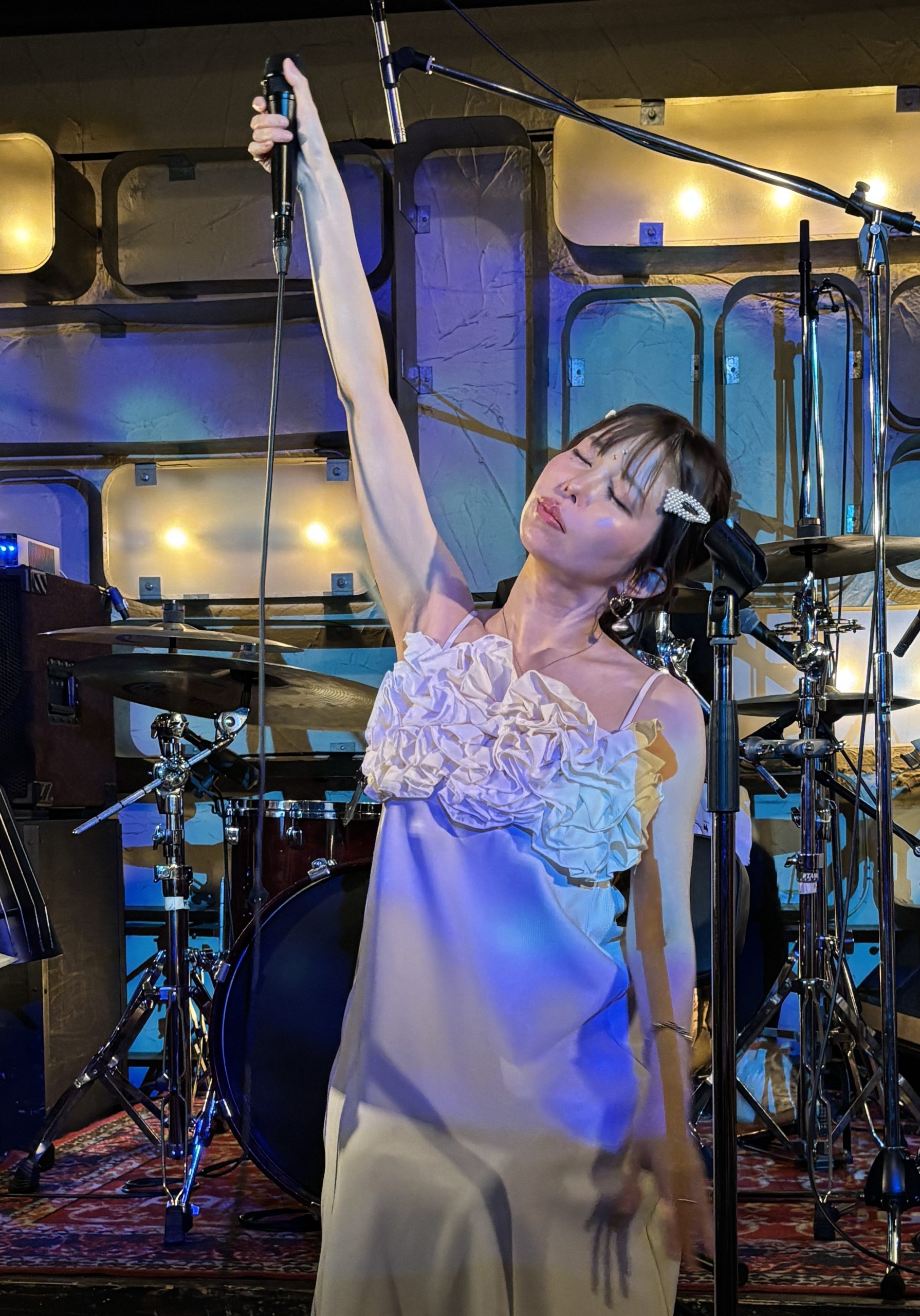
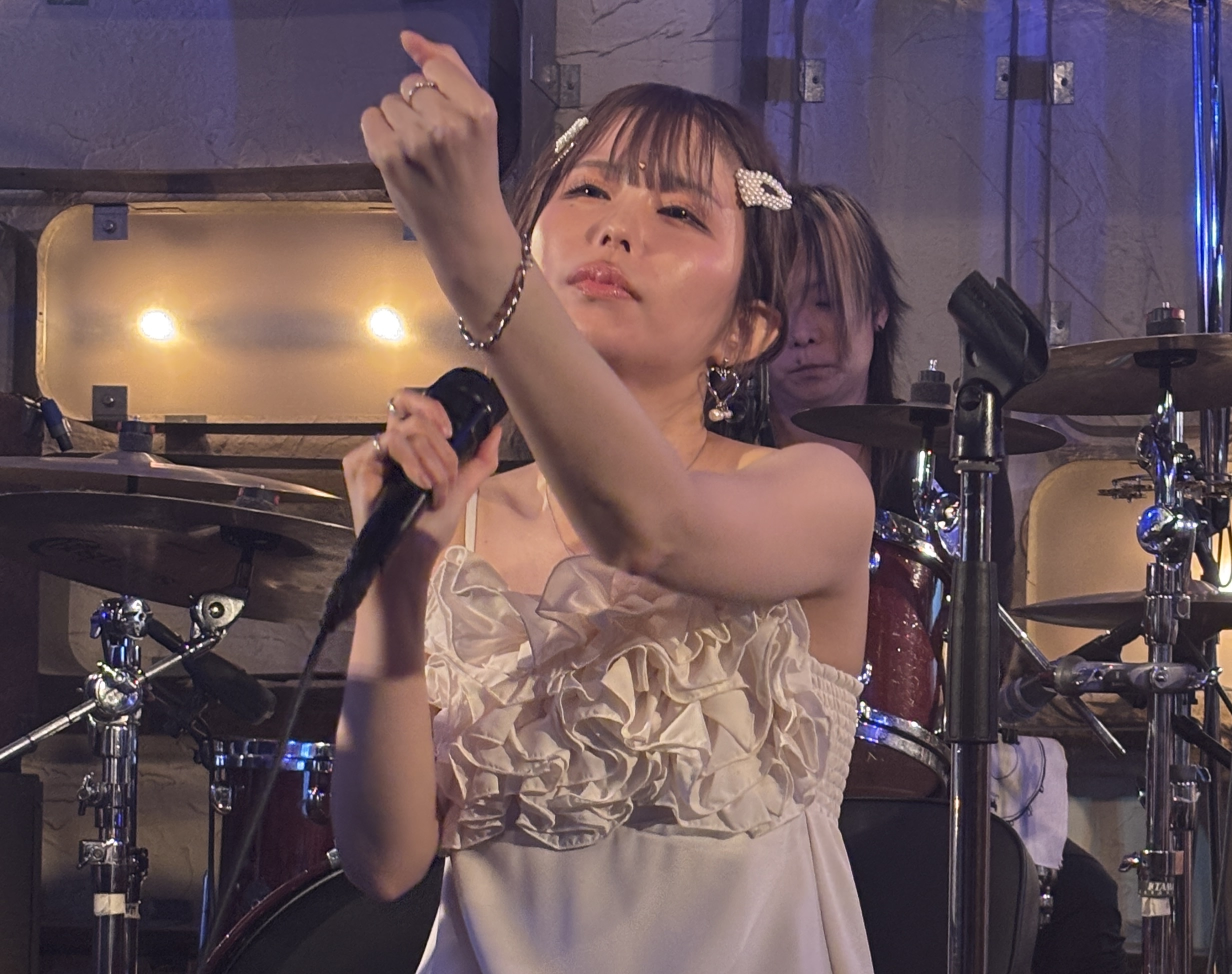
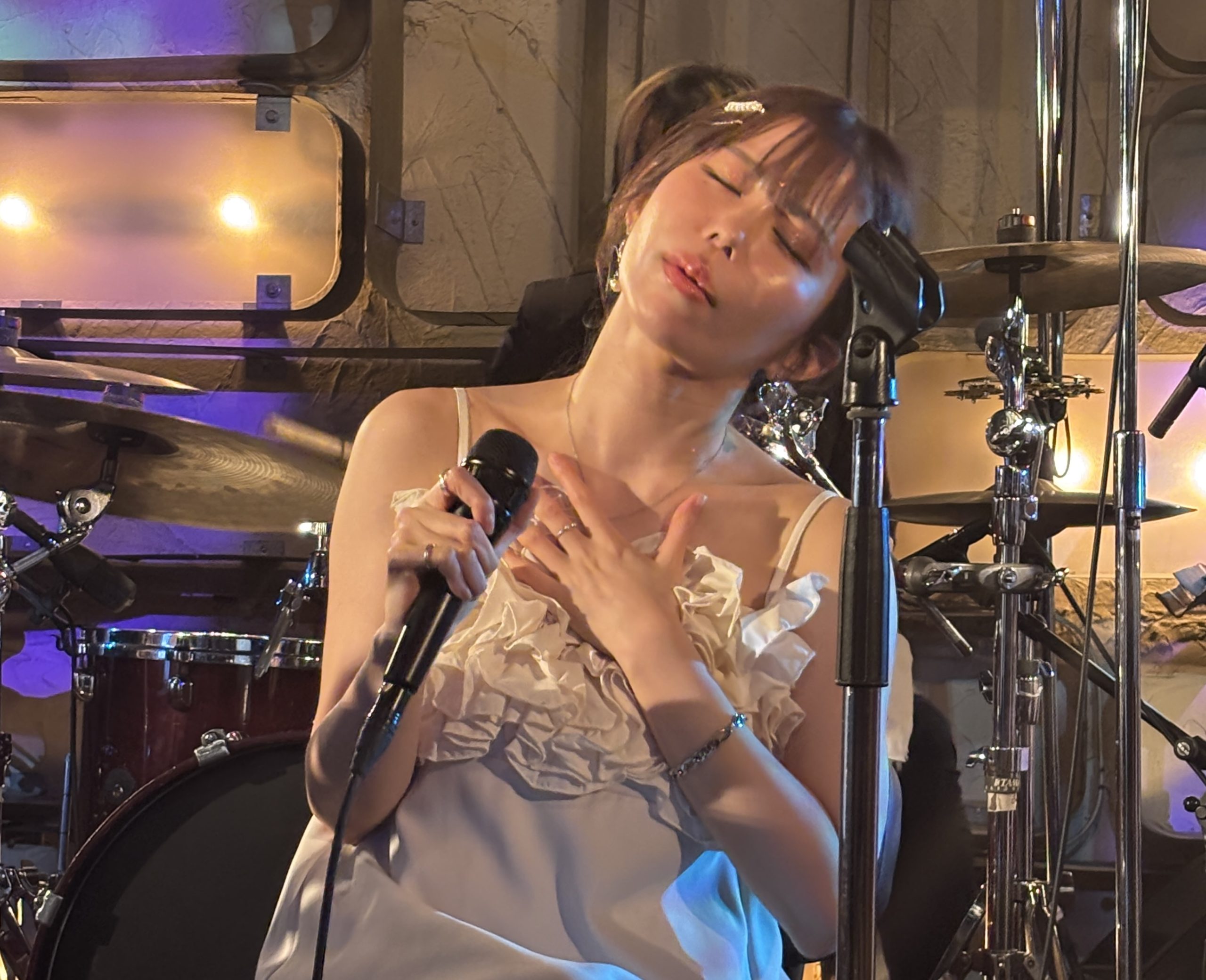
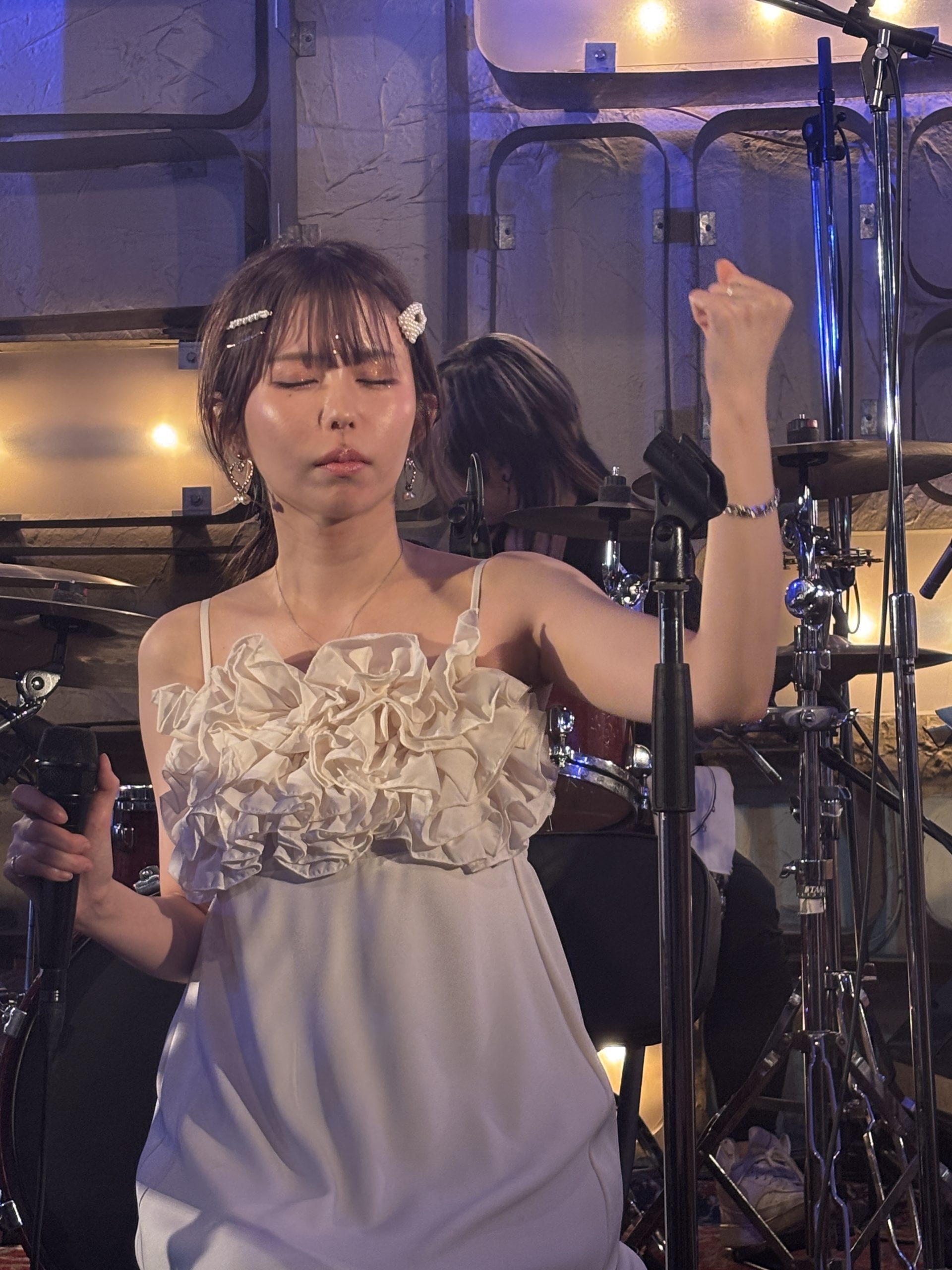
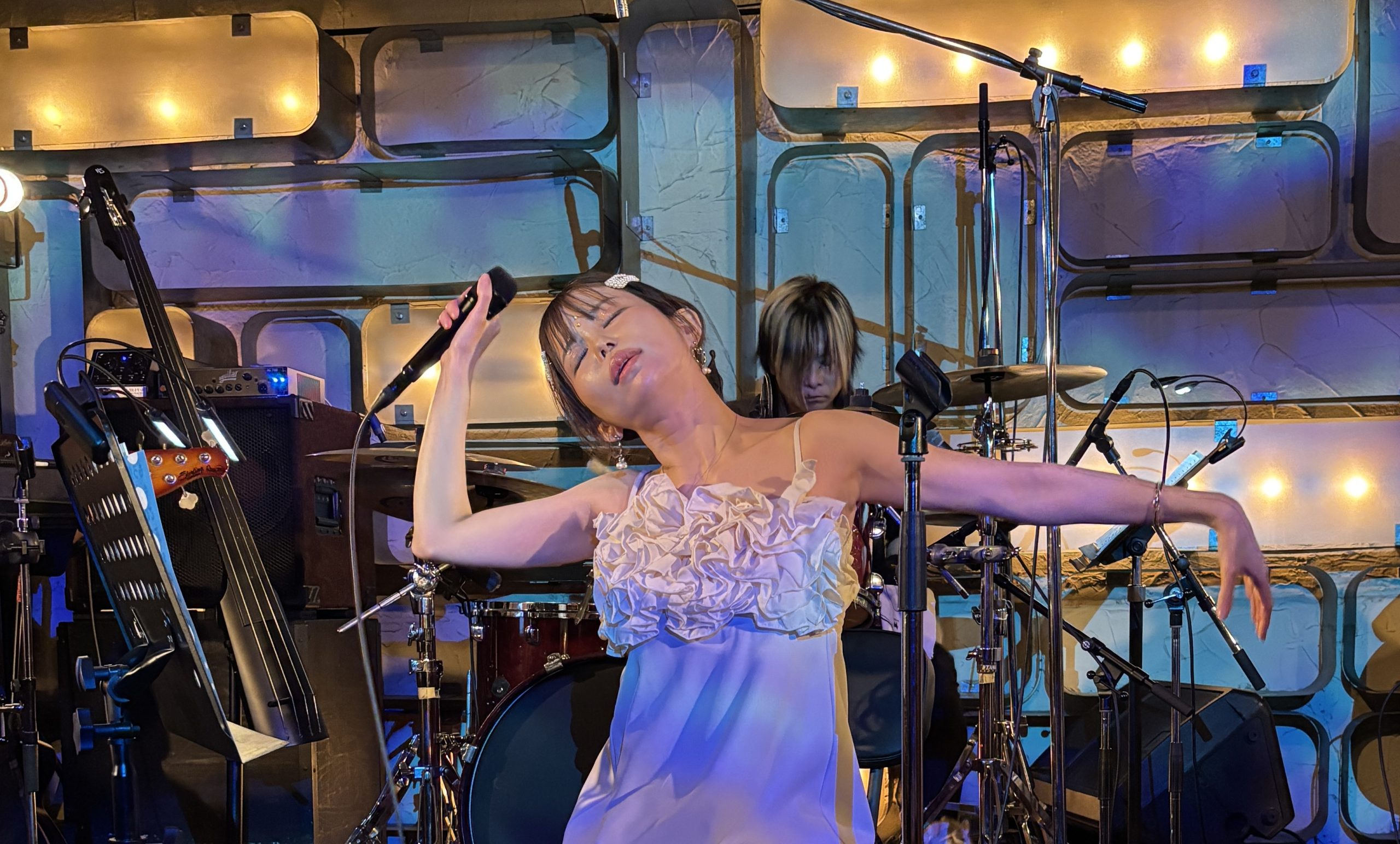
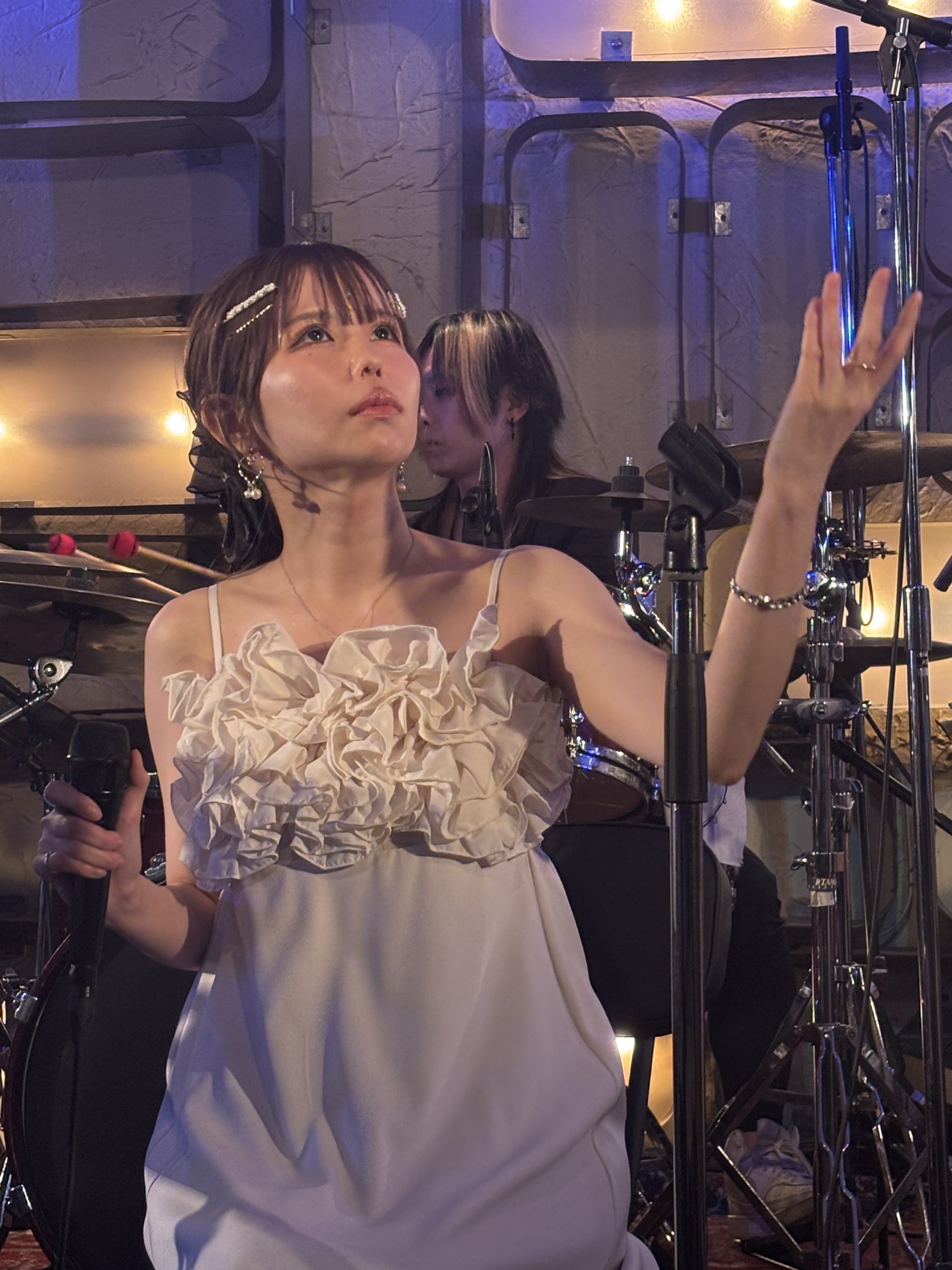
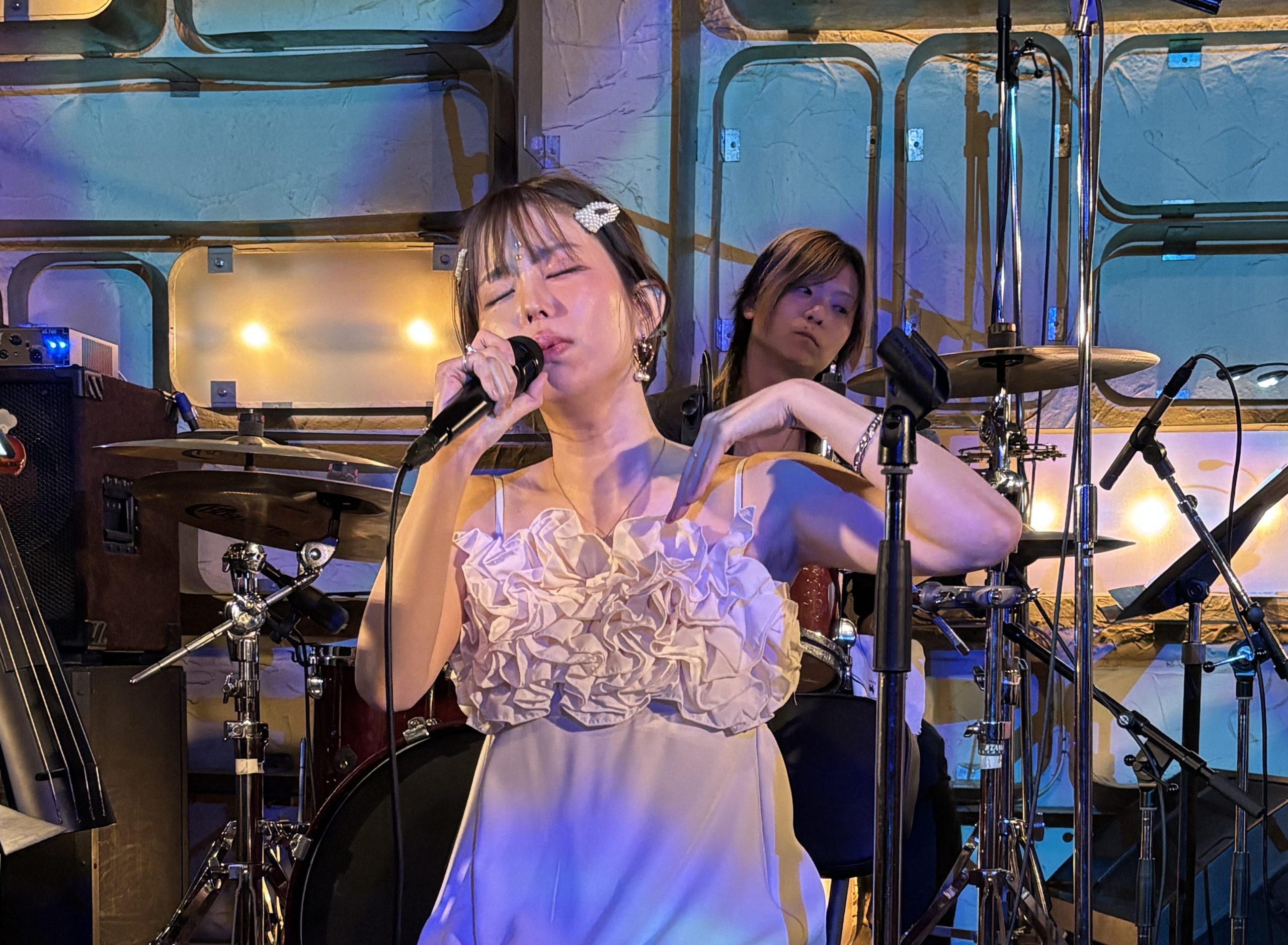
Perhaps the biggest transformation came from vocalist Kohaku. Rather than simply singing softer, she frequently reinvented her vocal delivery entirely. Tempos, phrasing, and vocal color constantly shifted to suit each arrangement. Even while remaining seated for most of the performance, her stage presence never diminished. Through subtle movement, expressive gestures, and complete emotional immersion in each song, she demonstrated that commanding a stage has little to do with how much space a performer occupies.
Grapefruit Moon proved to be the perfect venue for such an ambitious undertaking. With both the audience and performers seated throughout the evening, the atmosphere felt relaxed, intimate, and almost conversational. Rather than creating distance between the band and the audience, the setting brought everyone closer together, making the performance feel less like a traditional concert and more like a gathering celebrating four years of music.
Before the music began, Kohaku welcomed the audience with a simple invitation that perfectly summarized the evening’s atmosphere:
“We hope you’re looking forward to seeing a slightly different side of us today. Please relax, and let yourself get lost in this space, this time, and this music.”
That invitation immediately became reality with the opening number, “FRIDAY BUTTERFLY.”
A fitting choice to begin the evening, “FRIDAY BUTTERFLY” is a song in their catalog that already carried subtle jazz influences. Reimagined acoustically, it became softer, warmer, and more relaxed while still retaining the emotional weight of the original. Rather than building excitement through volume or intensity, the performance established what would become the defining atmosphere of the evening—one of intimacy, closeness, and complete immersion in the music.
Even from the opening song it was apparent that every member had approached these rearrangements with extraordinary care. The performance breathed differently than its amplified counterpart, allowing the nuances of each instrument to emerge naturally while leaving space for Kohaku’s expressive vocal performance to remain at the center.
Following the opening number, Kohaku spoke about the concept behind the evening’s performance. She explained that this was LOILO’s first seated live, adding that she personally preferred this style of concert for both the performers and the audience. Grapefruit Moon also held special meaning for her personally, as she had previously performed there during her days playing in a jazz band, making it a particularly fitting venue for LOILO’s acoustic anniversary celebration.
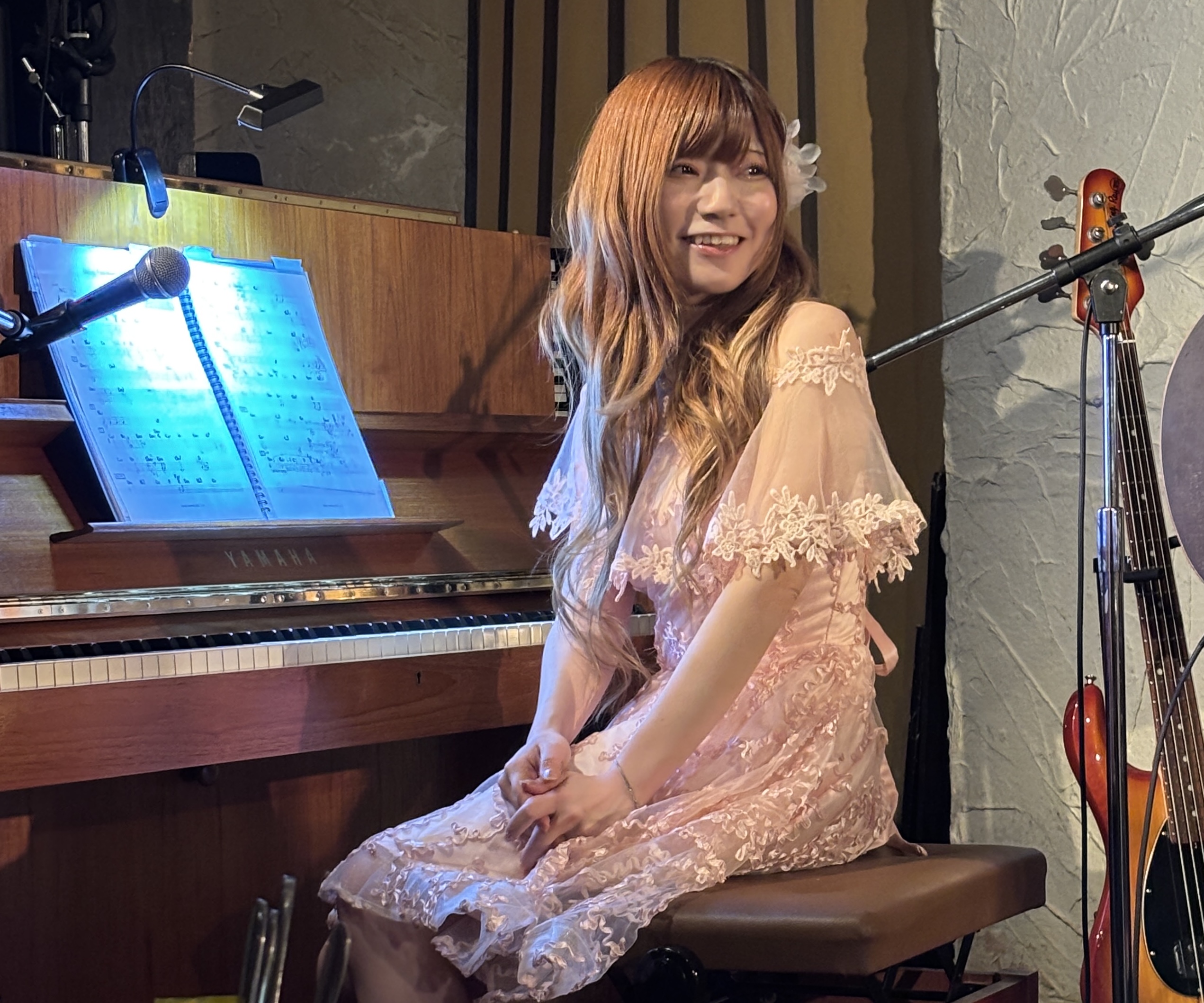
The evening continued with two of LOILO’s more intricate compositions, “Kenā‘an” and “In a World of Ashes.” Both songs underwent dramatic transformations. The aggressive pacing and intensity of their studio counterparts gave way to slower, more spacious arrangements that emphasized atmosphere over power. Isolated passages from Nana’s piano and Rin’s violin weaved naturally around Kohaku’s vocals, allowing every instrument room to breathe.
“In a World of Ashes” was particularly striking. Rin’s delicate pizzicato passages introduced an entirely new texture to the arrangement, while Kohaku’s vocal performance remained every bit as emotionally committed as its amplified counterpart. She wasn’t simply singing the lyrics—she was living them. Although the opening performance of “FRIDAY BUTTERFLY” carried a warm jazz-club atmosphere, these two songs shifted the mood into something far more introspective. The audience was no longer simply enjoying an acoustic concert; they were quietly absorbing every note.
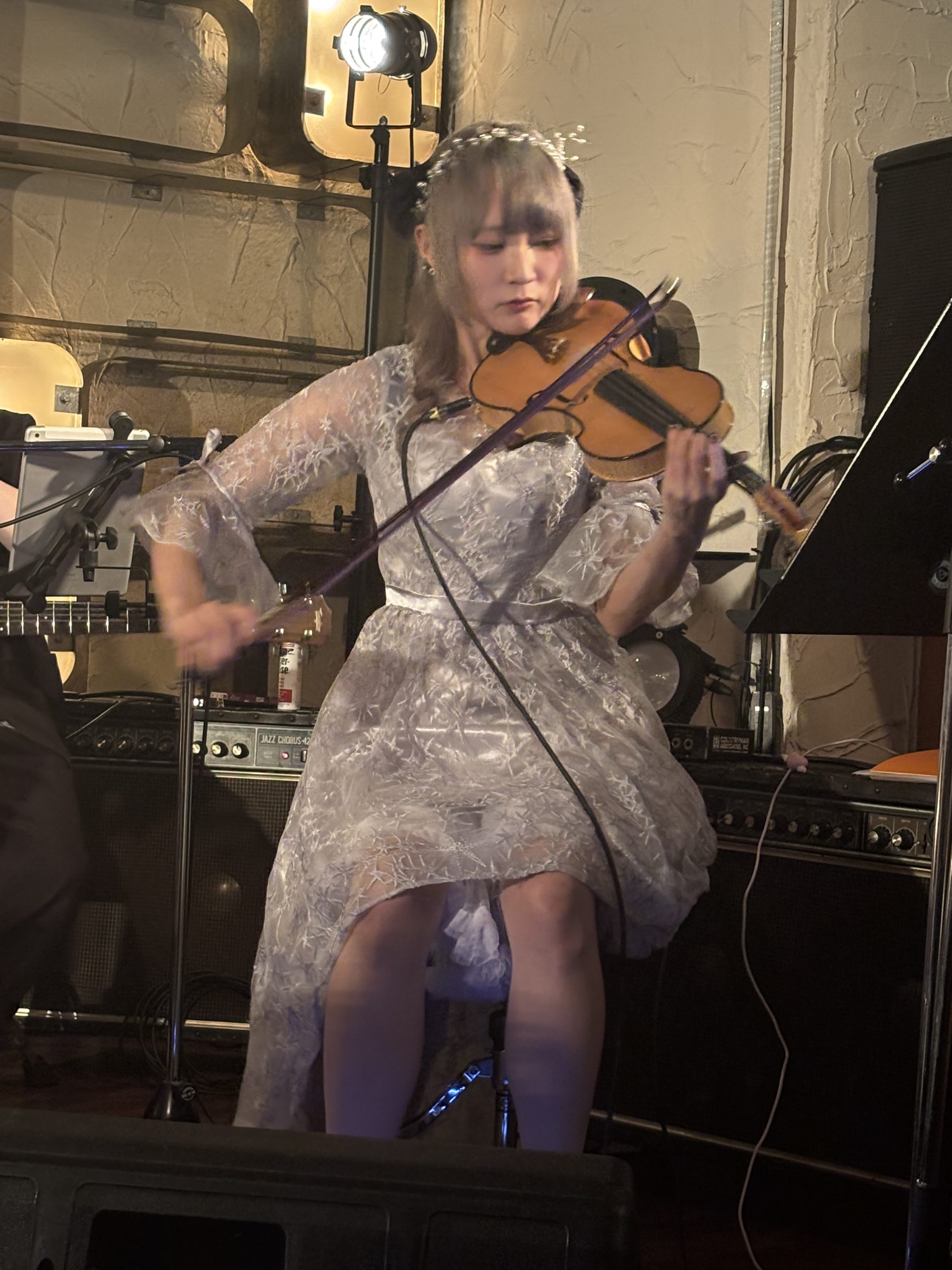
It proved to be the perfect lead-in to one of the evening’s most personal moments.
For the first time that night, Kohaku invited the audience behind the curtain of LOILO’s four-year journey.
She admitted that the future the band had envisioned when LOILO first formed had simply not happened.
“It’s already our fourth anniversary. The vision we had for where we wanted to be after four years hasn’t come true at all. They’ve been nothing but frustrating years. Sometimes I think maybe I shouldn’t keep chasing dreams that will never come true.”
It was a surprisingly vulnerable admission, but it was immediately followed by the reason she had never considered giving up.
“At the same time, I can’t just say, ‘Let’s keep doing this as a fun hobby.’ If this were only a hobby, it wouldn’t have to be with these members.”
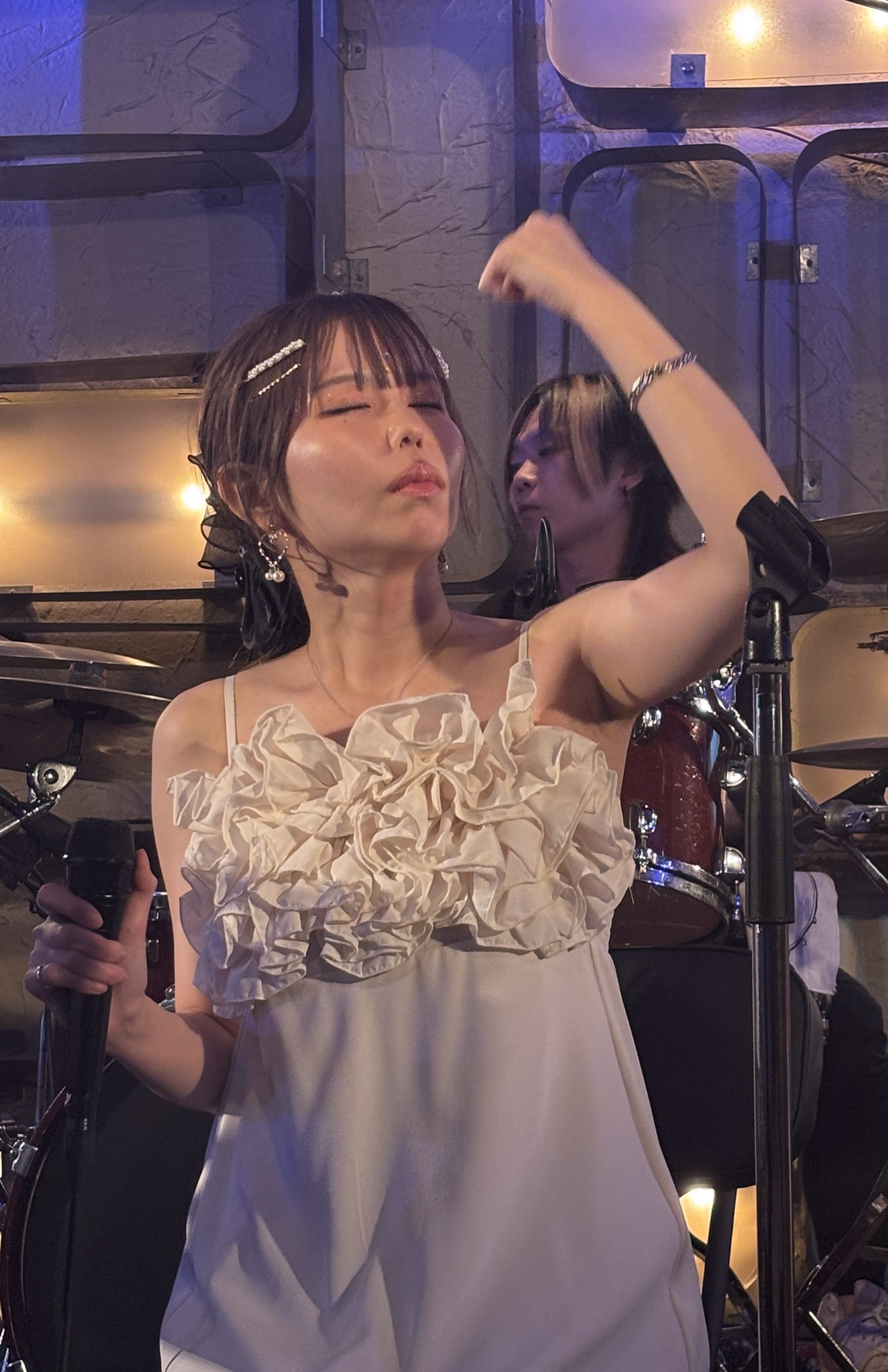
She explained that despite the disappointments, LOILO was never the kind of band that would simply break apart because the road had become difficult.
“That doesn’t mean we’re the kind of band that would break up over it. There’s still so much we can do with these members. I want to see it through to the end—and I want to get there soon. So the only thing left for us to do is find our next goal and keep moving forward.”
Kohaku then reflected on the hardships the band had faced over those four years—financial struggles, disagreements between members, and the uncertainty that comes with trying to build something together. Despite all of it, she said that one thing had continually reminded her those years had not been in vain: people had continued coming to hear LOILO’s music.
“When I think about everyone who has continued to come and listen to us, it makes me feel that these past four years weren’t a mistake.”
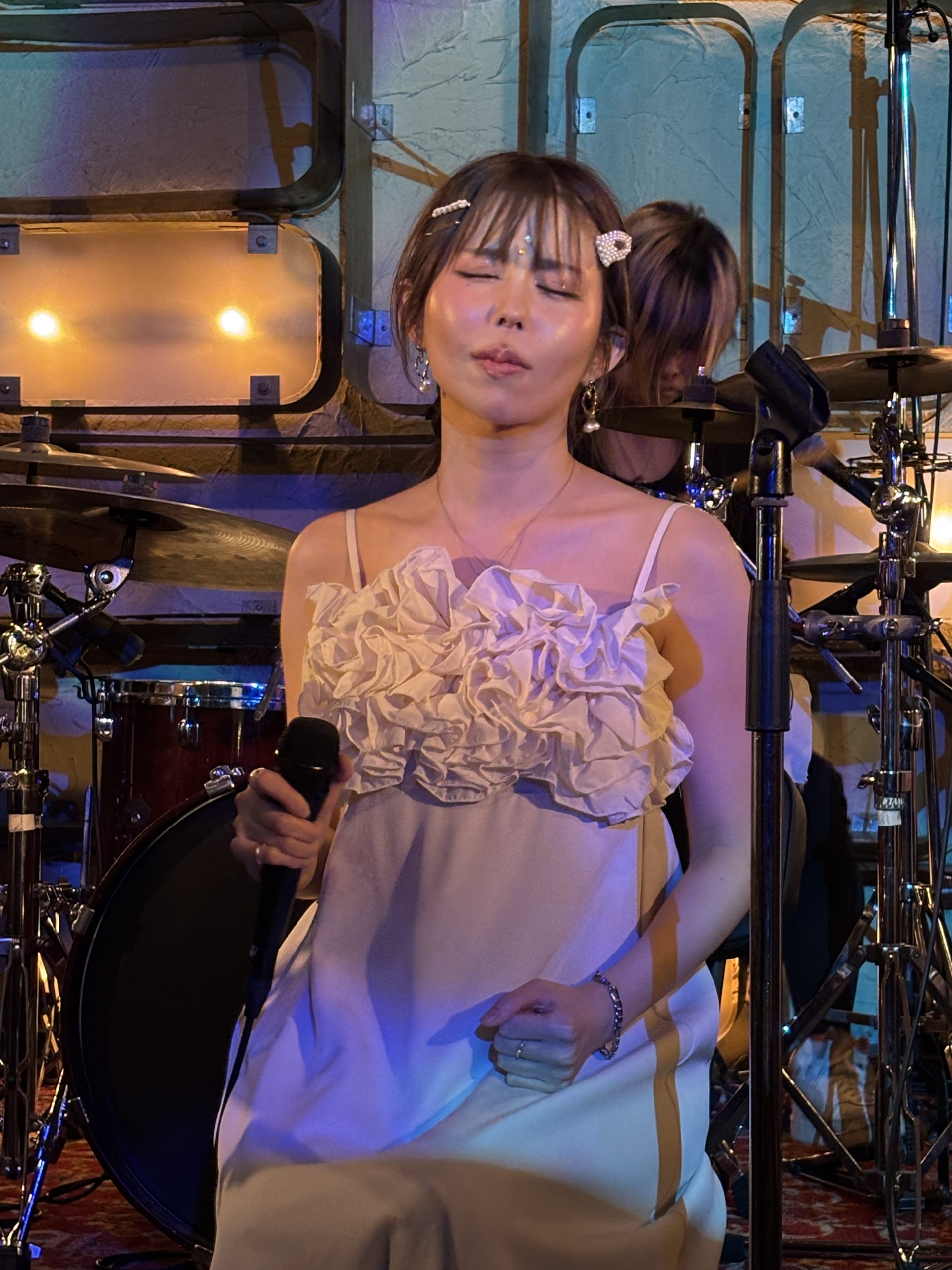
She then spoke about the relationship between LOILO and the audience, revealing what she believes has allowed the band to build such a loyal following.
“People often tell us that LOILO has a wonderful atmosphere, and I’m grateful for that. But I think it’s a mutual relationship. If you do things half-heartedly, only half-hearted people will follow you.”
She paused before delivering what was, for me, the defining statement of the evening.
“Some people come to our shows looking for something different, and they leave. But the people who are still with us today…they’re our pride.”
Those few minutes revealed more about LOILO than perhaps any performance could. It wasn’t simply an anniversary speech. It was an honest reflection on where the band had been, where they found themselves today, and why they still wanted to continue moving forward together.
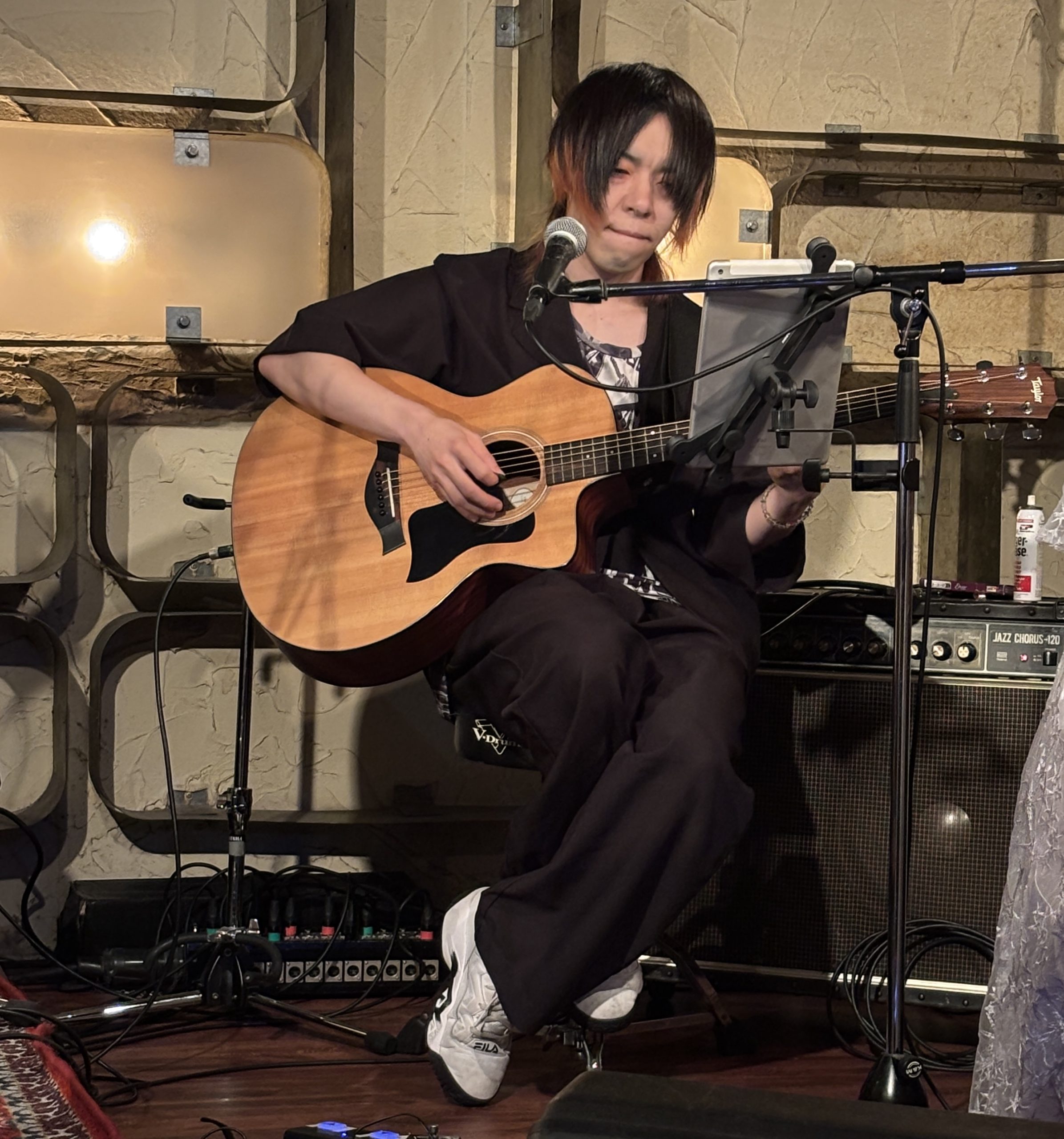
Before introducing “Dying Toeshoes,” Kohaku shared a little of the song’s history. She explained that it was the first song Kohei had written for LOILO and she shared that forming the band had been like assembling a party in Dragon Quest, gradually gathering the members who would eventually become LOILO. Turning to the song itself, she reflected that the lyrics were born from the frustration she had experienced during a period when music simply wasn’t working out the way she had hoped.
The acoustic rearrangement, however, gave the song an entirely different personality. While the original leans heavily into an anisong-inspired rock sound, this version embraced an upbeat jazz style that felt playful without sacrificing the emotion at its core. Ryosuke’s bass work was a particular highlight, featuring a wonderfully tasteful solo, while Mamoru’s restrained percussion and Kohei’s acoustic guitar allowed the arrangement to breathe in ways the original never could.
One thing that never changed, however, was Kohaku’s performance. Although seated like the rest of the band, her presence remained every bit as captivating. Through expressive gestures, natural movement, and complete emotional commitment to the lyrics, she demonstrated once again that the energy of a performance comes from the performer—not whether they’re standing or sitting.
“Midnight Ballerina” perhaps stayed closest to its original arrangement of any song performed that evening. While the acoustic instrumentation naturally softened the presentation, much of the song’s original character remained intact. Kohaku’s expressive movements throughout the performance once again demonstrated that even while seated, she never stopped performing. Every gesture, glance, and subtle movement remained completely synchronized with the emotions of the music.
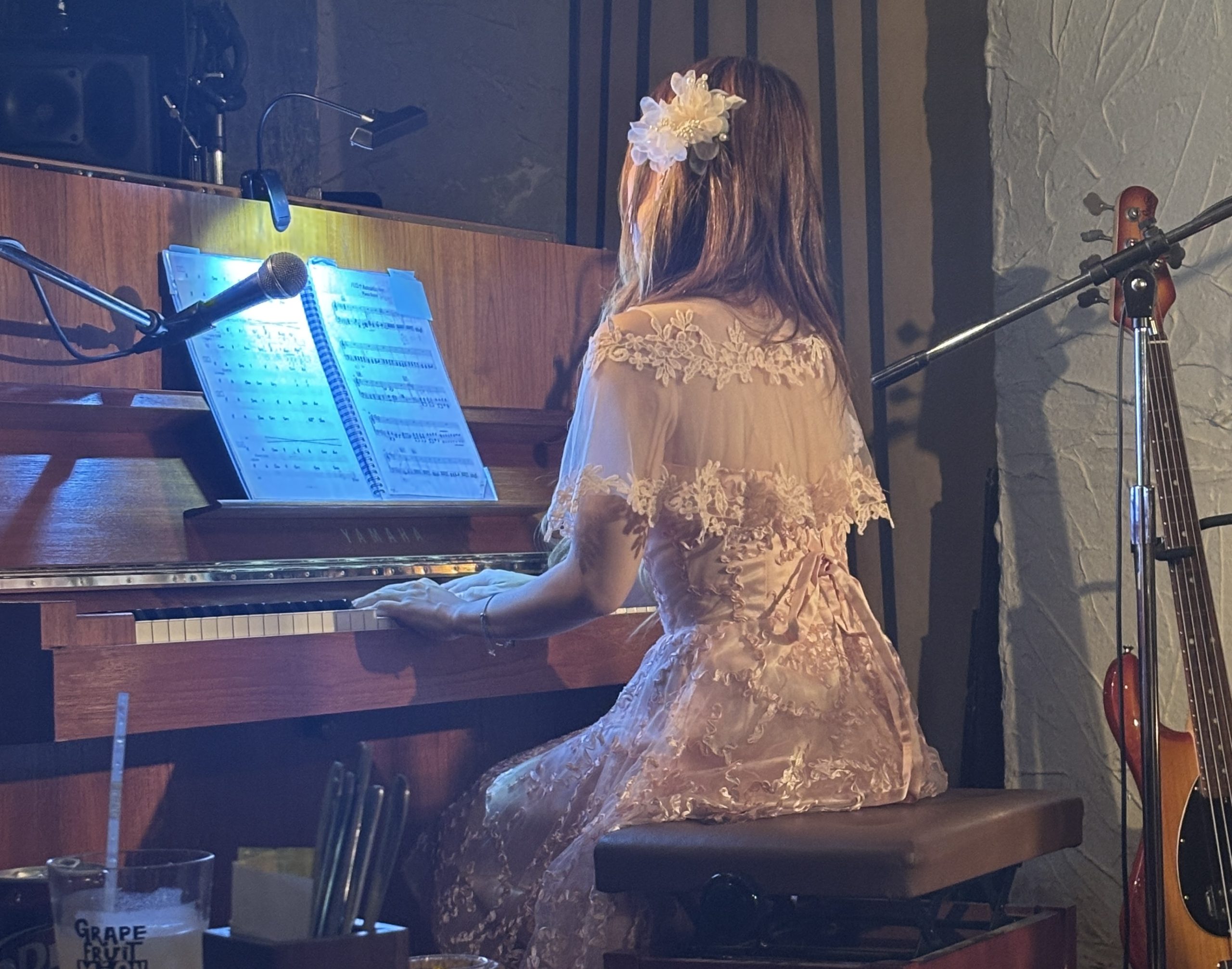
The atmosphere then became even more intimate as Kohaku introduced “Call to EDEN.” Performed only by Nana on piano, Rin on violin, and Kohaku on vocals, the song is reserved almost exclusively for LOILO’s one-man performances, making it a particularly special moment for those in attendance.
There is always a temptation when writing a live report to search for elaborate words to describe a performance, but sometimes the simplest description is the most accurate. It was simply beautiful. The delicate interplay between Nana’s piano and Rin’s violin created the perfect foundation for Kohaku’s vocal performance, allowing the emotion of the song to speak for itself. Notably, this was one of only three songs during the evening where Kohaku stood to perform, subtly reinforcing its significance within LOILO’s catalog.
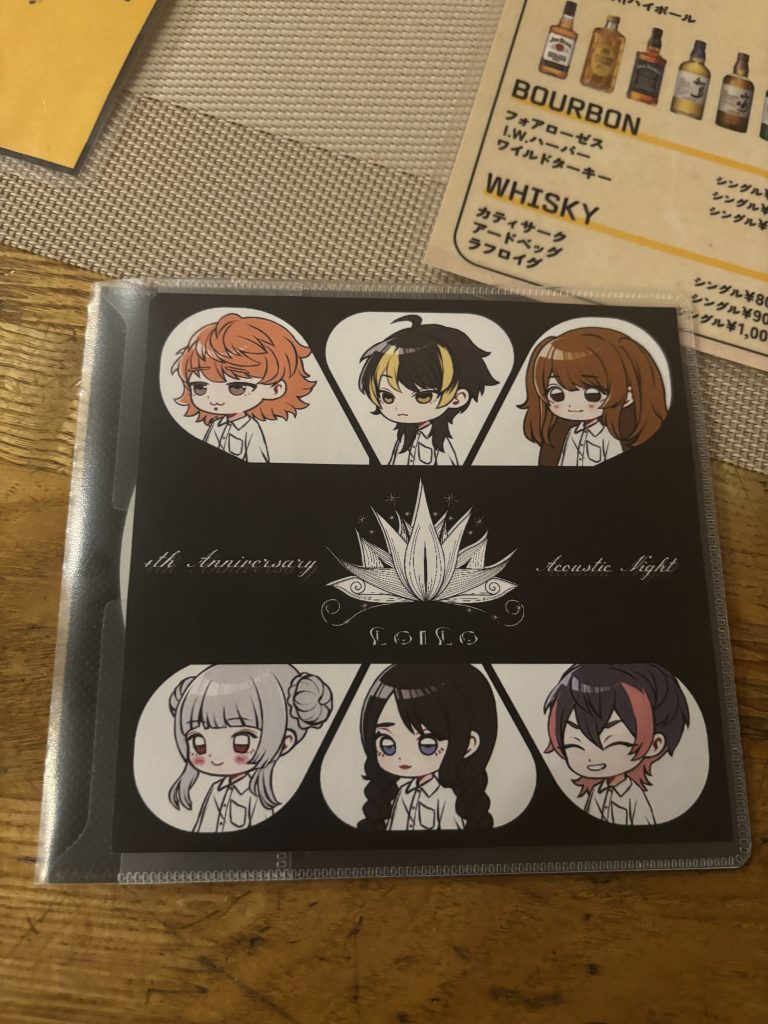
As part of the evening’s celebration, each attendee was presented with a commemorative CD personally signed by every member of LOILO. The disc contained three exclusive recordings, opening with an acoustic version of “EVA” that the band proudly revealed had been recorded in a single take. As wonderful as that was, the biggest surprise was something Kohaku had secretly included without telling the other members.
It was the very first song she had ever recorded.
The original recording dated back to 2012, just two weeks after she had decided to pursue singing, and was presented alongside a newly recorded 2026 version. Kohaku encouraged everyone to listen to both recordings back-to-back—not simply to hear how much her voice had improved over fourteen years, but to reflect on everything that must have happened during that journey.
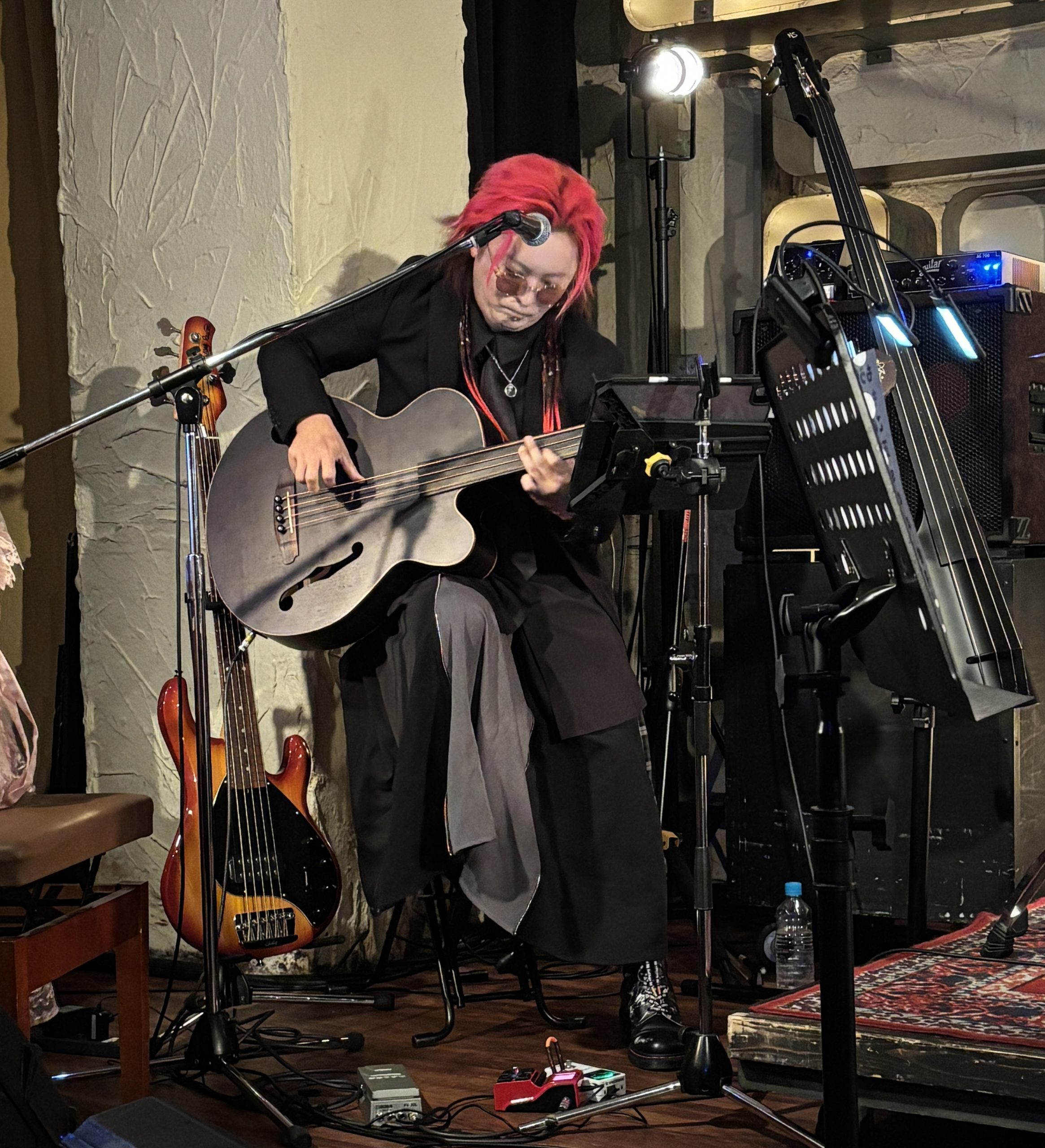
Before continuing, a lighthearted exchange between Kohaku and Ryosuke brought laughter throughout the room. Ryosuke admitted he wasn’t sure he would ever want to release a recording from when he was first starting out. After a little playful teasing from the other members, however, he smiled and replied that perhaps he would consider it “next time.”
Kohaku then shared the story behind those recordings.
She explained that before becoming a vocalist she had been a dancer, and the only singing she had ever done was during an audition for Annie. Laughing, she recalled being eliminated in the very first round.
“One day I was sitting with my mom at a café and suddenly told her, ‘I think I want to become a singer from now on.’ She looked at me like I had completely lost my mind. But then I played her the kind of music I wanted to make from that point forward…and she started crying.”
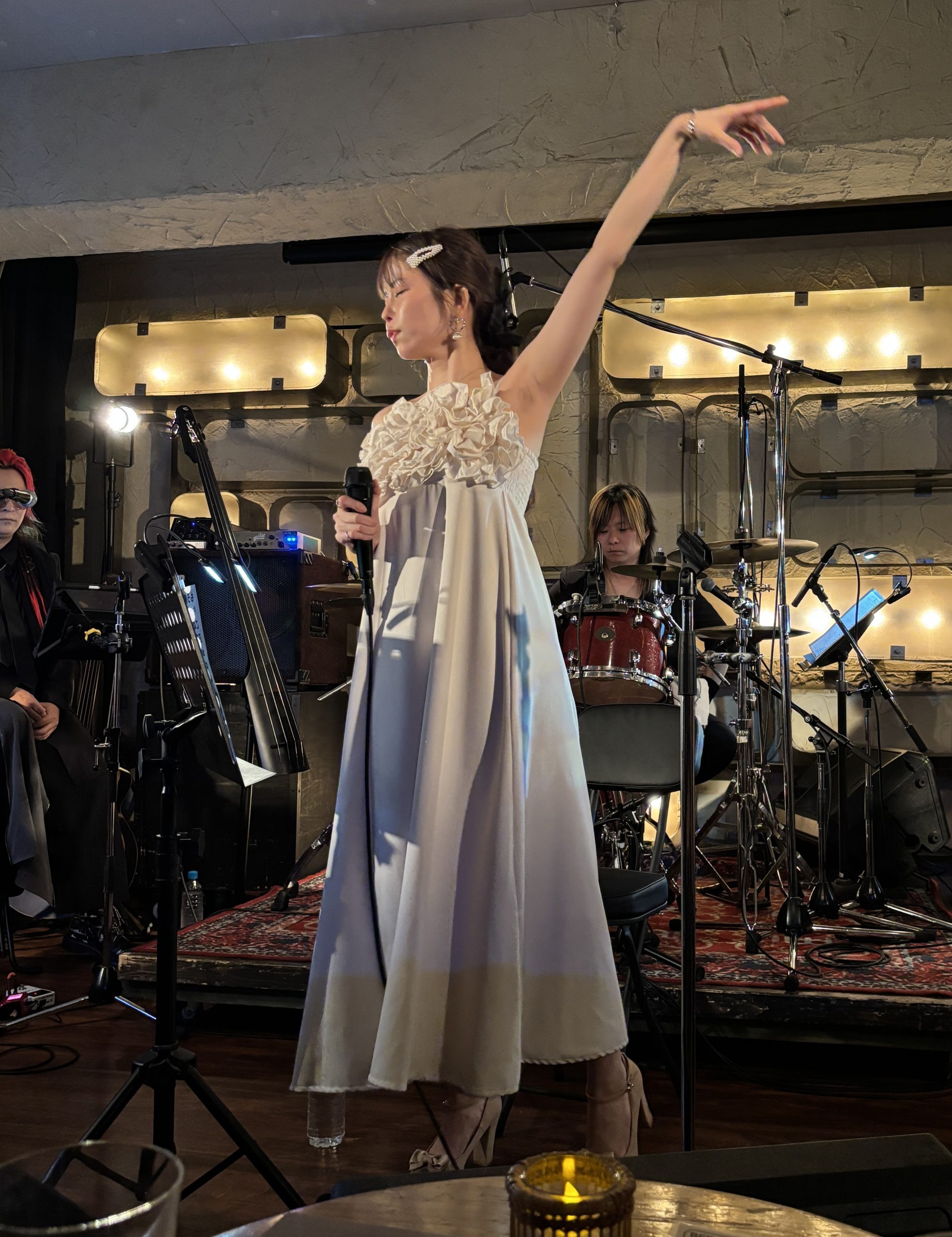
Looking back on that moment fourteen years later, Kohaku reflected on everything that had happened since.
“When you listen to these two recordings, don’t just think about how much my singing has changed. Think about everything that must have happened over those fourteen years to bring me here. I’m grateful that all of you have come along with me on that journey.”
It was another remarkably personal moment that perfectly captured the spirit of the evening. The commemorative CD was more than simply a souvenir—it became another way for LOILO to invite the audience into their history. Fittingly, the first track on the disc was the acoustic recording of “EVA,” the very song the band would perform next.
The band then performed “EVA,” the same acoustic recording featured as the opening track on the commemorative CD. After hearing the care and attention that had gone into its creation, it quickly became apparent why the band had chosen this particular arrangement to represent the evening.
More than perhaps any other song performed that night, “EVA” showcased every member of LOILO individually while never losing sight of the song as a whole. The arrangement was remarkably intricate without ever feeling crowded.
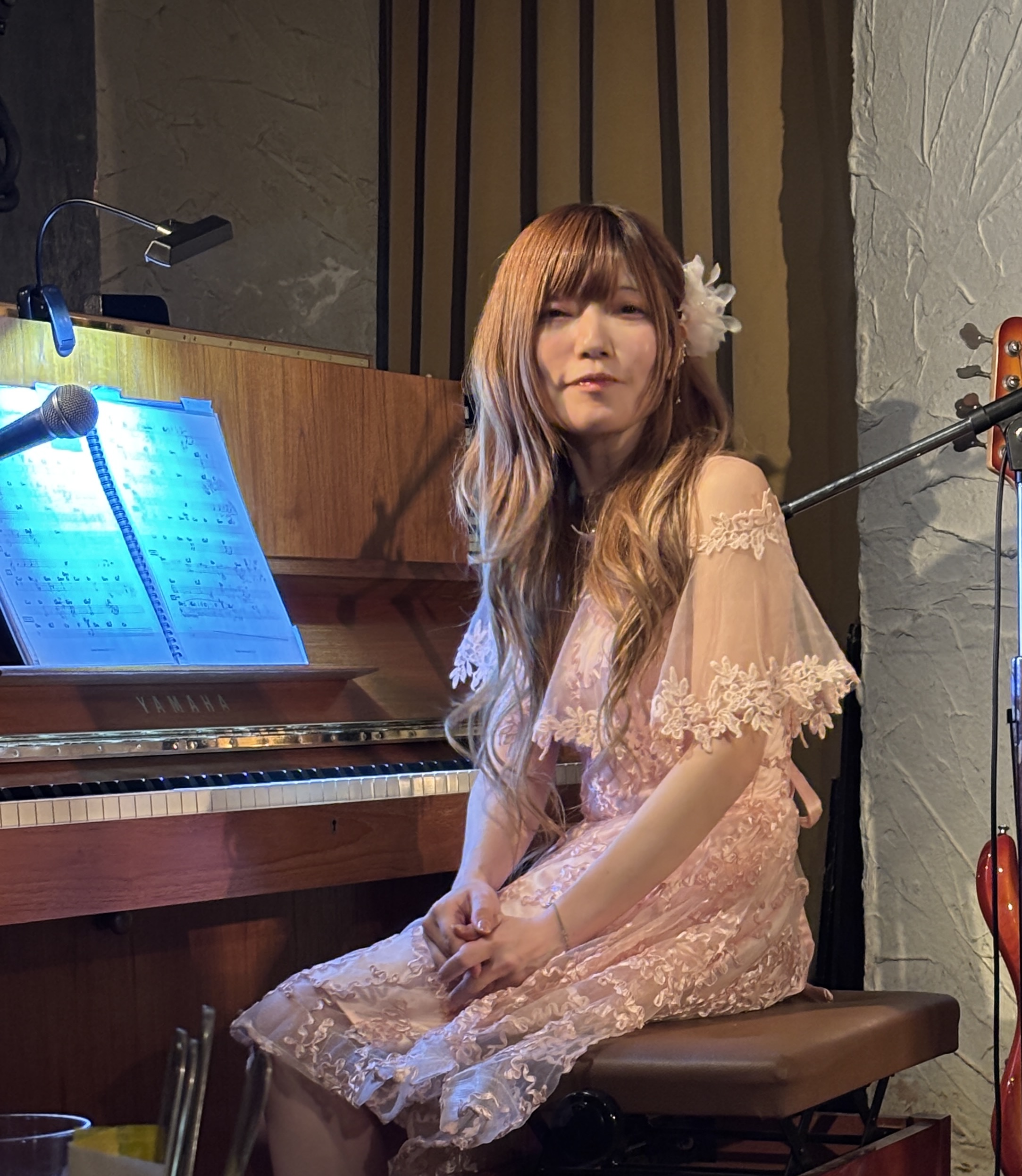
During the opening verse, delicate piano flourishes from Nana danced around Kohaku’s vocals before being answered by equally graceful phrases from Rin’s violin. Rather than accompanying the melody, the instruments seemed to carry on a conversation with one another. Throughout the performance, Ryosuke’s bass anchored everything with warmth and restraint while Mamoru’s understated percussion—driven primarily by shimmering cymbal work and a steady pulse—allowed every subtle detail of the arrangement to shine through.
Kohei’s contribution was equally impressive. His beautifully melodic solo leading into the final chorus, performed with an almost mandolin-like character, fit the arrangement perfectly while adding yet another layer to an already richly textured performance.
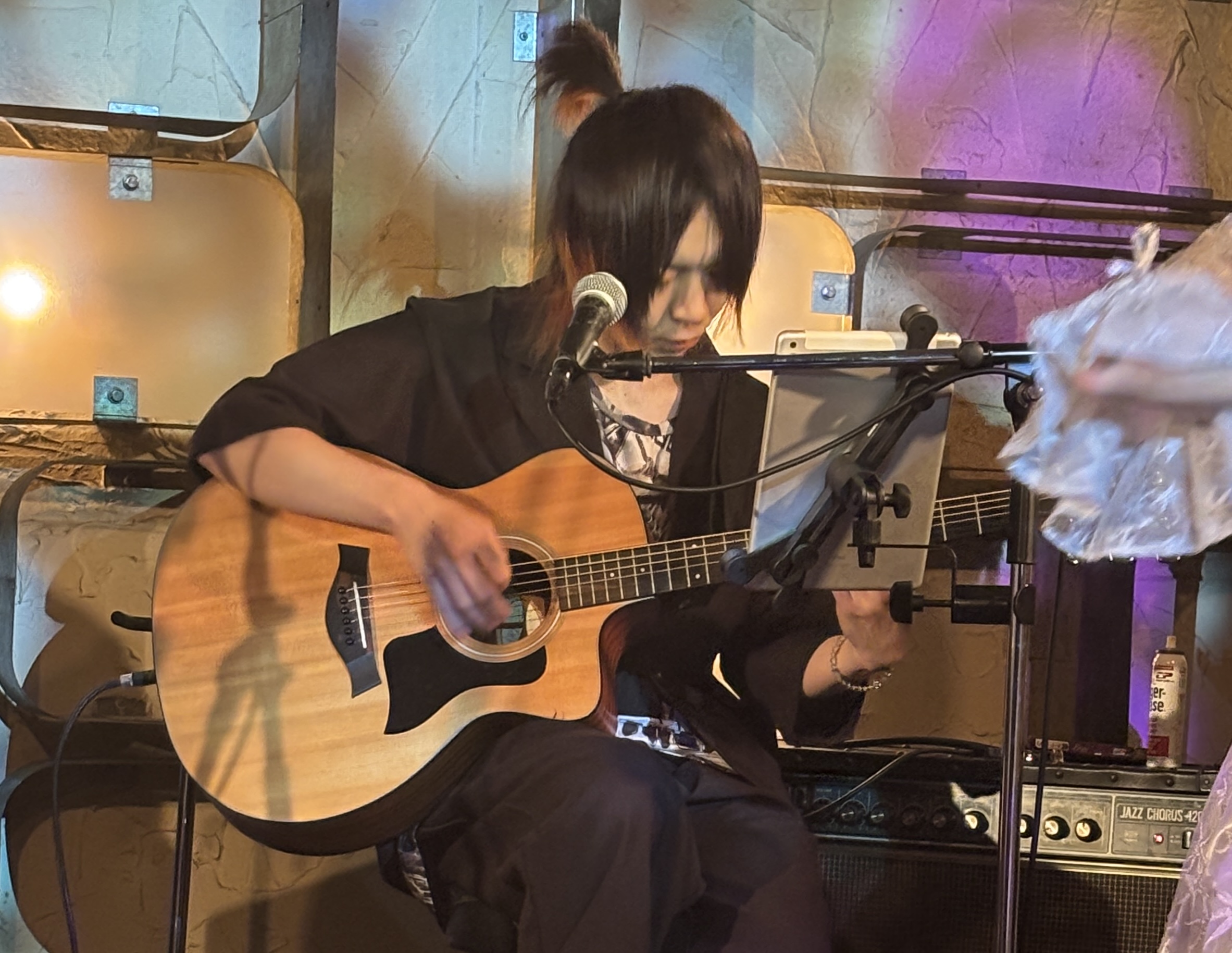
Through it all, Kohaku’s vocals remained the emotional center of the piece. Even with so many intricate musical ideas unfolding around her, every lyric remained the focal point of the performance.
Rewatching the performance afterward, I found myself noticing something new each time—another piano flourish, another violin phrase, another subtle rhythmic accent. It is an arrangement that rewards repeated listening, and after experiencing it live, I completely understood why LOILO chose it as the centerpiece of the commemorative CD.
“Will forever, I loved you” followed, another of LOILO’s emotional ballads that is performed far less frequently than many of the band’s other songs, making it a particularly welcome addition to the setlist. Much like “Call to EDEN,” Kohaku chose to stand for the performance. Whether intentional or not, it subtly emphasized the song’s emotional significance within the evening. Combined with the understated acoustic arrangement, the performance became one of quiet intimacy rather than dramatic intensity.
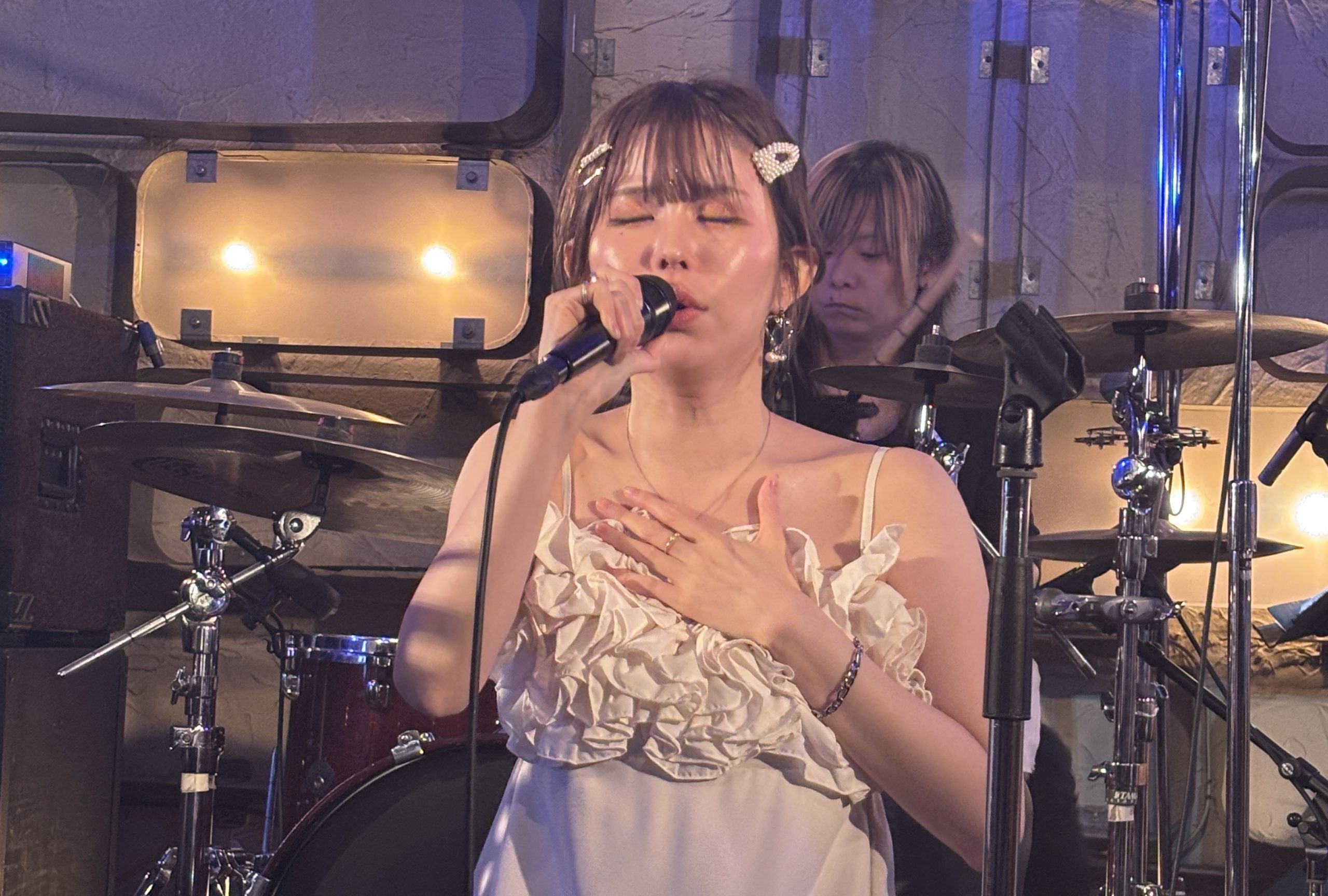
Before continuing with the final stretch of the concert, the members reflected on the unique atmosphere that had developed throughout the evening.
Kohaku smiled as she spoke about performing an acoustic live.
“When we play like this, I can feel the tension too. There’s a strong atmosphere in the room. I know everyone is listening to every single note, and I can feel all of that coming back to us.”
She admitted that after experiencing it, she already wanted to do another acoustic performance.
The conversation then shifted to the band’s songwriting process. Ryosuke explained that whenever he writes a new arrangement, he often reaches a point where he looks at the parts on the page and wonders, “Is it even possible for someone to play this?” Yet every time he brings those songs to the rest of the band, they return having mastered what he had written. Watching the members continually overcome those challenges only inspires him to push even further the next time he composes, creating a cycle where LOILO constantly raises its own musical standard.
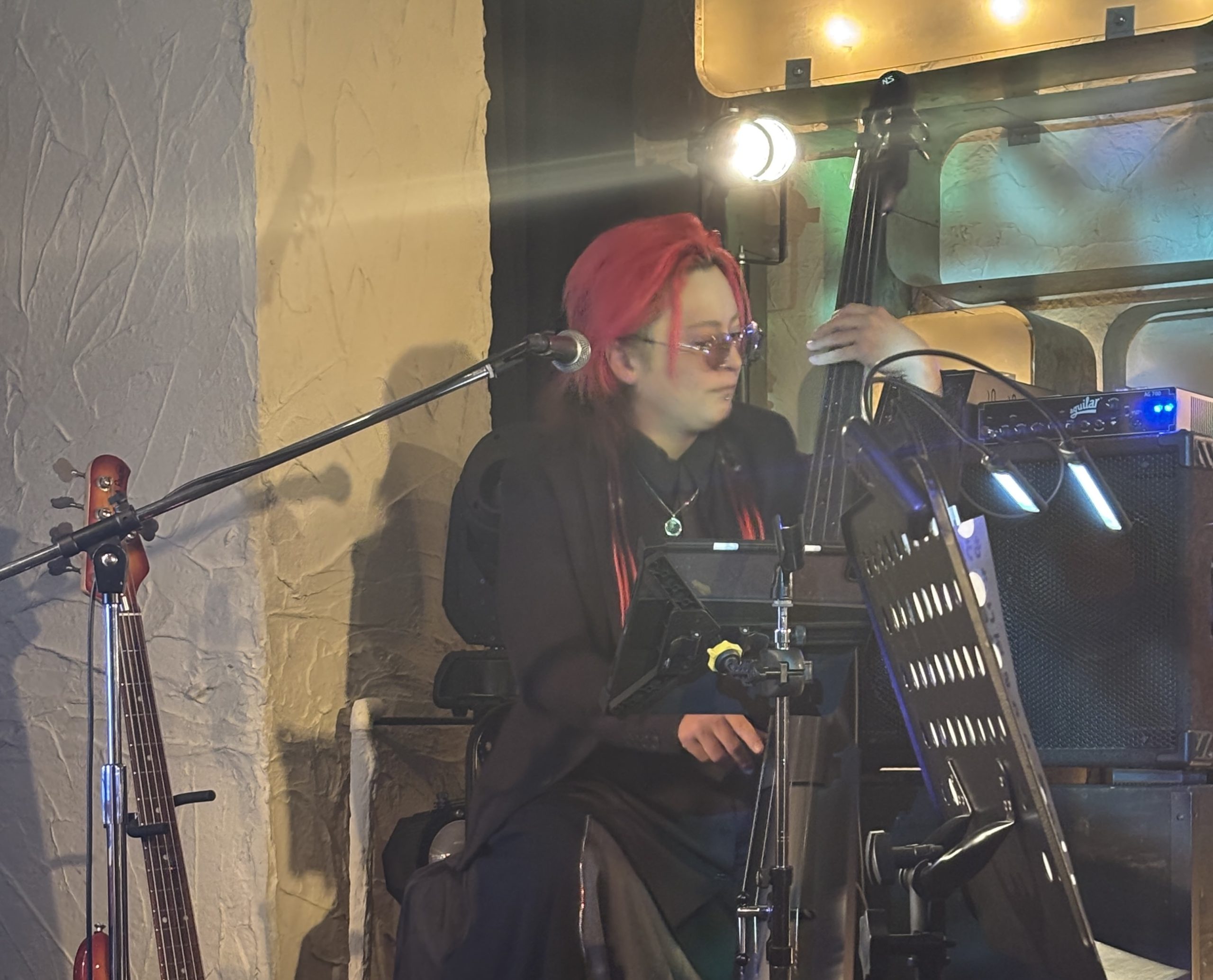
That exchange naturally led into a thoughtful discussion about why the band continues to challenge themselves musically. Rather than simplifying their songs, they shared that they want each new piece to become even more intricate than the last, trusting one another to continue growing as musicians.
Kohaku then revealed something the audience had been completely unaware of throughout the performance.
She had been suffering from pharyngitis since the previous day.
“Until a little while ago, I could barely even speak.”
Rather than announcing it before the concert or asking the audience to lower their expectations, she decided there was only one option.
“I just thought…I have no choice but to get through it.”
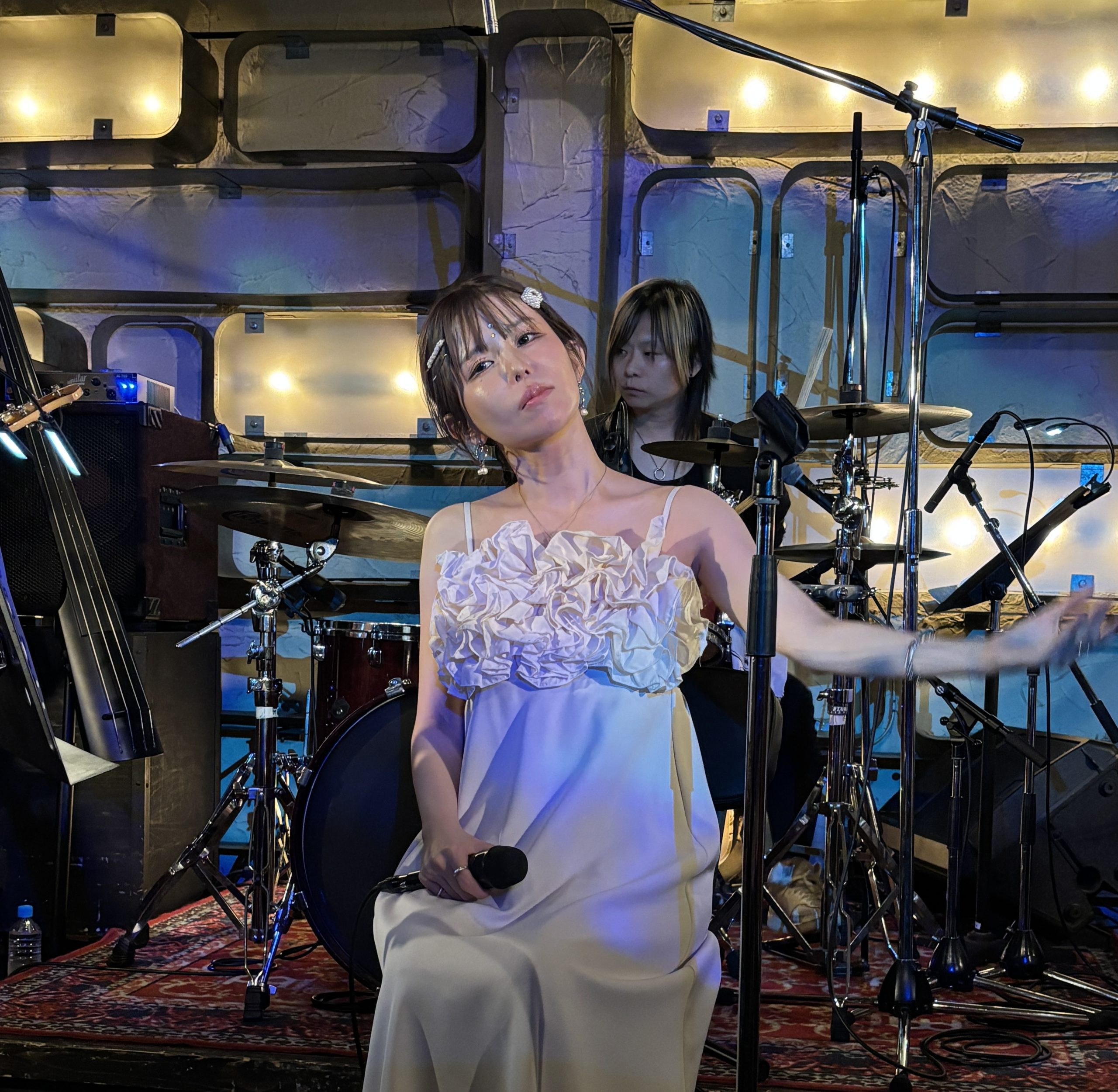
She laughed, adding that something like kajiba no chikara—the extraordinary strength people find in desperate situations—had somehow carried her through the performance.
The conversation concluded with one final reflection on why the six members have remained together.
Kohaku explained that what has allowed LOILO to continue isn’t simply friendship, but the deep respect each member has for the others as artists. Sometimes, she said, it can actually be harder to honestly criticize a close friend. But because they respect one another’s artistry, they are willing to challenge each other, have difficult conversations when necessary, and continually push one another to improve.
She smiled as she looked toward the other members.
They loved the songs they were creating.
They wanted to keep challenging themselves.
And she hoped they would still be doing exactly that five…or even ten years from now.
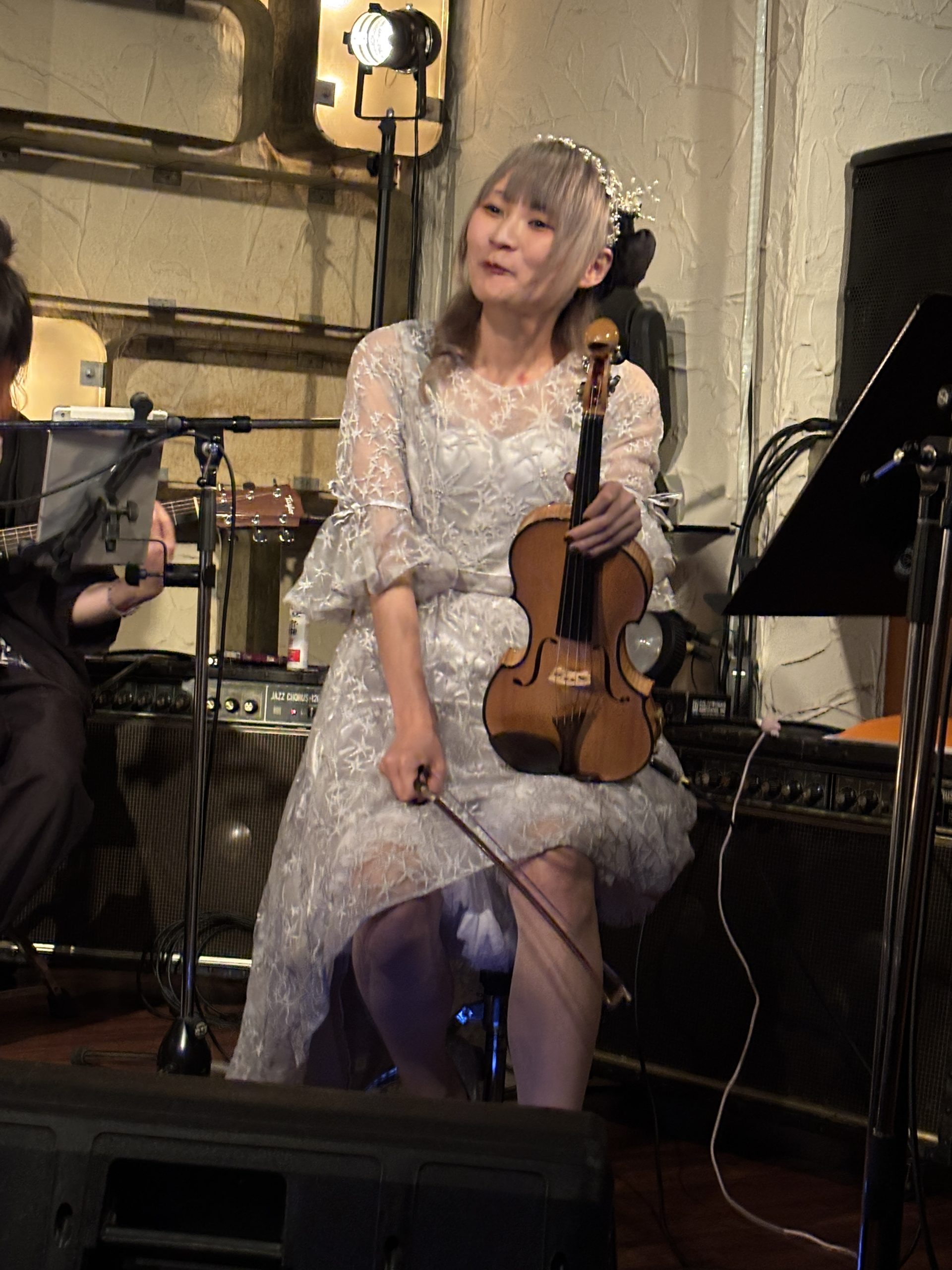
If there was one performance that perfectly illustrated the band’s earlier discussion about continually raising the bar for themselves, it was “Say Lace.” Already one of LOILO’s more intricate compositions, the acoustic rearrangement transformed the song into something entirely unexpected. The original’s slower symphonic energy gave way to a lively, sophisticated jazz-inspired arrangement filled with intricate interplay between every member of the band.
Each musician was given an opportunity to shine. During the instrumental break, Kohaku introduced the members one by one, allowing each to showcase their expertise before seamlessly returning to the ensemble. Rather than feeling like isolated solos, these moments celebrated how each member’s individual musicianship contributes to LOILO’s unique sound.
Kohaku’s vocal performance was equally transformed. Singing with a rich, throaty, sultry delivery that perfectly complemented the jazz styling, she approached the song in a completely different way from the original recording. The entire performance carried an infectious sense of enjoyment. Every member looked like they were having an absolute blast performing the arrangement, and that feeling naturally spread throughout the venue.
Even while remaining seated, Kohaku seemed to dance through the song. Her shoulders swayed with the rhythm, her expressions constantly shifted with the music, and every movement flowed naturally alongside the performance. It was another reminder that stage presence has little to do with how much ground a performer covers. Even from a chair, she remained completely immersed in the music, drawing the audience into that same feeling with her.
By the time the song concluded, it was hard to imagine a more fitting example of everything the band had discussed only moments earlier. The arrangement was technically demanding, musically adventurous, and overflowing with personality—a perfect showcase of six musicians continually challenging one another while never losing sight of the joy of performing together.
Before introducing the final song of the evening, Kohaku first turned toward her fellow band members.
“That was a perfect performance. Thank you.”
She then offered them one final compliment that perhaps revealed more about how she views LOILO than anything else she had said that evening.
“It’s not about how technically skilled someone is. It’s about the aura they bring. In that sense, these five people are truly incredible.”
After spending much of the evening reflecting on LOILO’s four-year journey, their struggles, and the respect the members have for one another as artists, those words carried considerable weight.
Kohaku then introduced the final song. She explained that it was one they reserved only for special occasions. Calling it a very sad piece, she chose not to explain its meaning, instead encouraging everyone to simply read the lyrics and experience the song for themselves.
“My sister is in heaven” brought the evening to a quiet and deeply moving conclusion.
After a concert that had not only reimagined LOILO’s music but also invited the audience into the band’s history, creative philosophy, and personal journey, it was difficult to imagine a more appropriate closing song. Throughout the evening, the members had repeatedly pulled back the curtain, sharing stories of frustration, perseverance, artistic growth, and gratitude. Ending with perhaps the band’s most deeply personal work felt less like a finale and more like the final chapter of everything they had shared together that night.
Photo Gallery
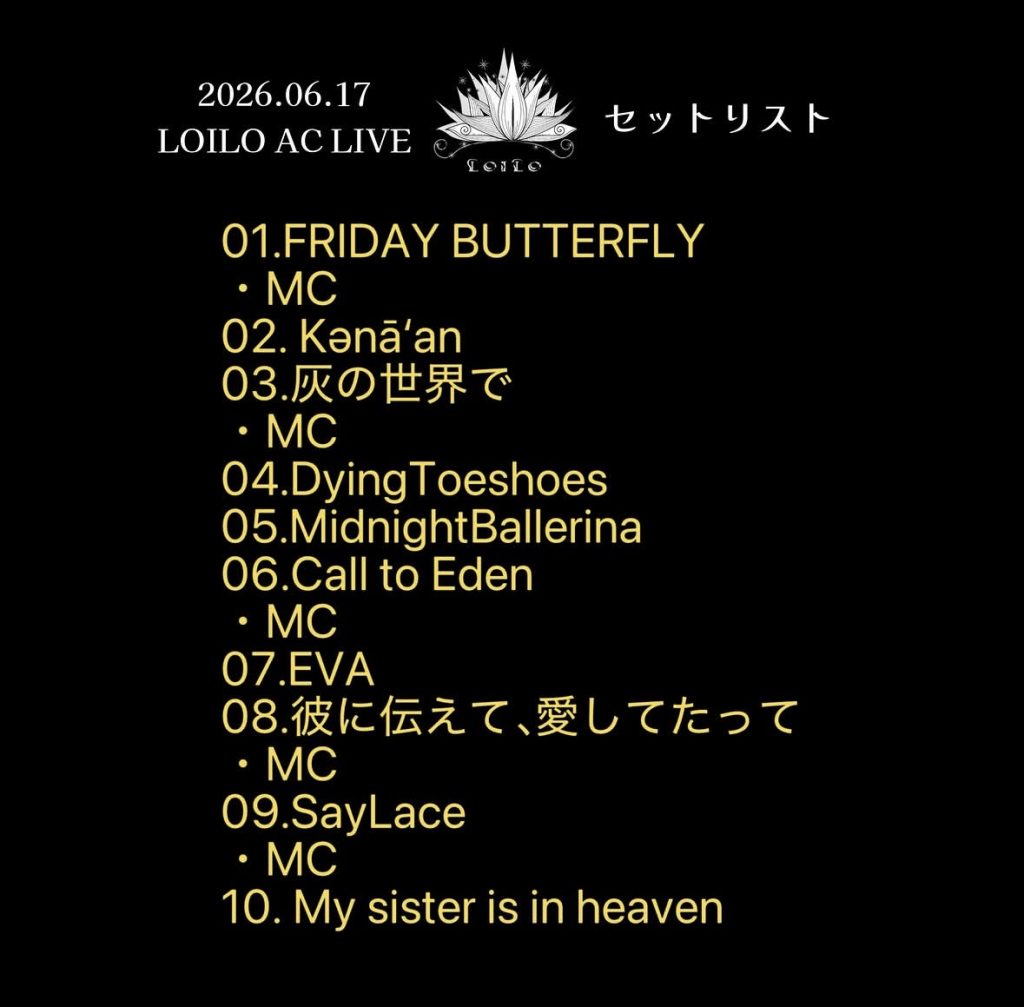
The setlist information is further down past the Photo Gallery.
Setlist
LOILO
Sangen-jaya GRAPE FRUIT MOON – June 17, 2026
LOILO Spotify: https://open.spotify.com/artist/4CMvJRp4AkUnLfwaZXL9tP?si=Ci1Tdv7aRAmXc-mSdH4TtA
LOILO YouTube: https://www.youtube.com/@loilooffichial
LOILO X: https://x.com/LOILO_official
LOILO Instagram: https://www.instagram.com/loilo_official/
© Copyright 2026 UniJolt